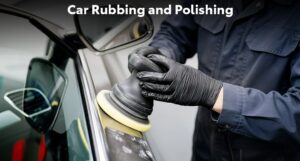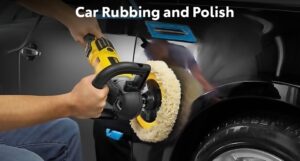
A car’s paint gradually loses its smooth and glossy appearance due to regular driving, washing, dust, pollution, sunlight, and environmental exposure. Even when the paint is not seriously damaged, you may notice fine circular marks under sunlight, light scratches around door handles, or a generally dull finish after a few years of use.
Car rubbing and polishing provides an effective way to correct these surface imperfections and restore the paint’s smooth finish. These detailing processes improve the paint surface by correcting minor imperfections and restoring clarity and shine.
Find below how car rubbing polish works to remove swirl marks and minor scratches.
What Are Swirl Marks on Car Paint?
Swirl marks are fine scratches on the upper surface of a car’s paint. They often become clearly visible when the vehicle is parked under direct sunlight or bright artificial lighting.
Although they appear circular, swirl marks usually consist of numerous fine scratches running in different directions. Light reflects unevenly from these scratches, creating the familiar web-like appearance.
Several everyday practices can cause swirl marks, including:
- Wiping a dusty car with a dry cloth
- Using dirty sponges or wash mitts
- Washing with rough materials
- Using contaminated microfibre towels
- Applying excessive pressure while cleaning
- Improper drying techniques
- Poor-quality machine polishing
Cars regularly exposed to dust and pollution can develop these marks faster, particularly when owners frequently wipe the surface without properly washing away loose dirt first.
Swirl marks generally affect the clear coat rather than the deeper paint layers, which is why professional car rubbing polish can often improve them considerably.
How Does Car Rubbing Work?
Car rubbing is a paint-correction process that uses an abrasive compound to reduce visible surface imperfections.
Automotive paint usually includes several layers, with a transparent clear coat protecting the coloured paint underneath. Many light scratches and swirl marks remain within this upper clear-coat layer.
During car rubbing, an appropriate compound carefully removes a microscopic amount of the affected surface. This helps level the area surrounding shallow scratches so that light reflects more evenly from the paint.
As the surface becomes more uniform, swirl marks and minor imperfections become less visible.
Car rubbing can help address problems such as:
- Swirl marks
- Light scratches
- Mild oxidation
- Surface haze
- Minor paint transfer
- Certain water spots
- Dull paint
The process requires careful execution. Using an unnecessarily aggressive compound or applying excessive pressure can remove a more clear coat than required.
Can Car Polishing Remove Minor Scratches?
Yes, car polishing can remove or significantly reduce many minor scratches, particularly when they remain within the clear coat.
Polishing uses finer abrasives than heavy rubbing compounds. Instead of performing aggressive correction, it refines the surface and improves paint clarity.
Very fine scratches caused by washing, wiping, or everyday contact may respond particularly well to polishing.
A superficial scratch may disappear almost completely after correction. A slightly deeper mark may become significantly less noticeable but remain visible under close inspection.
A deep scratch that penetrates through the clear coat cannot usually be removed safely through polishing alone.
What Is the Difference Between Rubbing and Polishing?
Car owners often use the terms rubbing and polishing interchangeably, but they serve different purposes.
Rubbing focuses primarily on paint correction. It uses comparatively stronger abrasives to address visible imperfections such as swirl marks, oxidation, and light scratches.
Polishing focuses on surface refinement. It generally uses finer abrasives to improve clarity, smooth the finish, and restore gloss after correction.
Depending on the condition of the vehicle, a detailer may use both processes.
A car with noticeable swirl marks and surface scratches may first require rubbing to correct the defects. Polishing can then refine the corrected surface and improve its final appearance.
A vehicle with only mild dullness and very fine marks may require polishing without aggressive rubbing.
The correct approach depends on the condition of the paint rather than applying the same process to every vehicle.
Which Scratches Can Rubbing and Polishing Remove?
Car Rubbing polish works best on surface-level imperfections.
They can generally improve:
- Fine swirl marks
- Light wash scratches
- Minor surface scratches
- Mild paint oxidation
- Surface haze
- Light water spots
- Minor paint transfer
- Loss of gloss
These imperfections usually affect the upper clear coat and can therefore respond to controlled paint correction.
Results vary depending on paint hardness, scratch depth, previous paint correction, vehicle age, and overall paint condition.
Which Scratches Cannot Be Removed by Polishing?
If a scratch penetrates through the clear coat and reaches the colour coat, primer, or metal underneath, polishing cannot replace the missing paint.
Deep scratches may appear as clearly defined lines and may reveal a different colour beneath the surrounding finish. They may also catch a fingernail easily.
These defects may require:
- Touch-up paint
- Spot paint repair
- Panel refinishing
- Professional denting and painting
Trying to remove a deep scratch by repeatedly using an aggressive rubbing compound can damage the surrounding clear coat without actually repairing the scratch.
Professional assessment therefore becomes important when the depth of the damage is uncertain.
Can Car Rubbing Polish Restore Dull Paint?
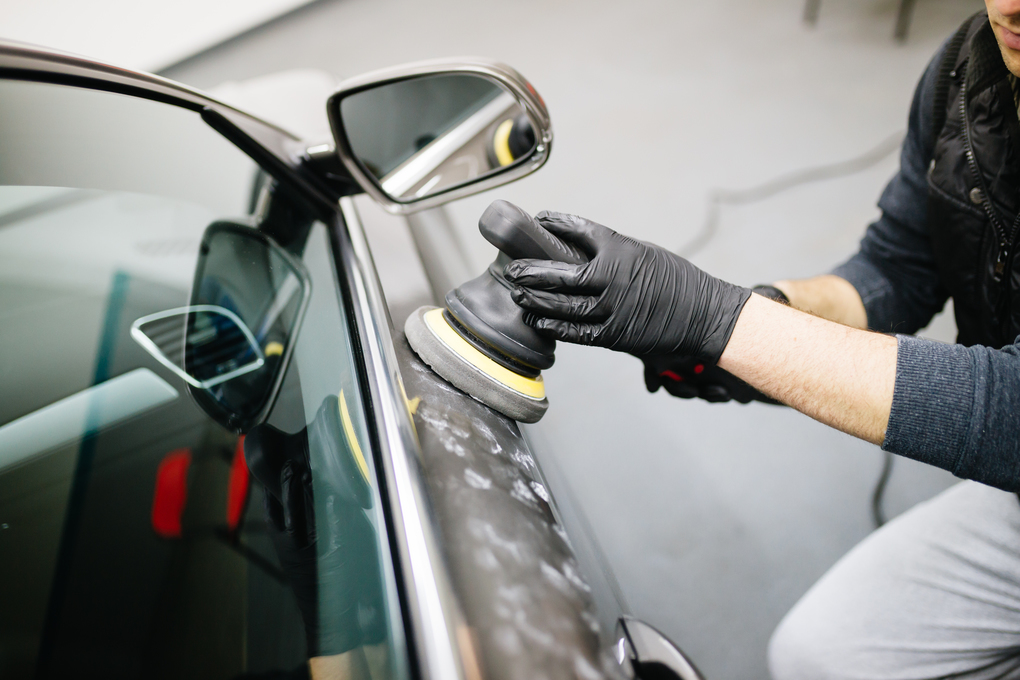
Yes, rubbing and polishing can improve dull paint when surface-level imperfections cause the loss of shine.
Over time, environmental exposure, improper washing, oxidation, contamination, and fine scratches can reduce paint clarity. Instead of reflecting light evenly, the damaged surface scatters it, making the vehicle appear dull.
Paint correction can remove or reduce these imperfections and restore a smoother surface. Polishing then refines the finish and improves gloss.
The difference can become particularly noticeable on darker colours, where swirl marks and surface haze tend to appear more prominently.
However, polishing cannot restore paint that has suffered severe clear-coat failure, peeling, extensive cracking, or major damage. Such conditions may require repainting.
Why Should You Choose Professional Car Rubbing Polish?
Car rubbing products are readily available, but paint correction requires more than simply applying a compound and rubbing the surface.
Different vehicles can have different paint characteristics, and even individual panels on the same car may vary if previous repairs or repainting have taken place.
Professional detailers assess the paint before deciding how aggressively to correct it.
They select appropriate combinations of:
- Rubbing compounds
- Finishing polishes
- Machine polishers
- Cutting and finishing pads
- Machine speed
- Pressure and technique
Incorrect methods can introduce additional swirl marks, haze, uneven correction, or excessive clear-coat removal.
Professional correction focuses on achieving the required improvement while preserving as much healthy clear coat as possible.
This becomes especially important for older vehicles or cars with an uncertain detailing and repair history.
How Long Do the Results of Car Rubbing Polish Last?
Rubbing and polishing service can produce lasting paint correction because the process physically reduces suitable surface defects rather than simply hiding them.
However, new swirl marks can develop after correction if owners return to improper washing and drying practices.
How long the finish remains in good condition therefore depends heavily on maintenance.
Car owners can help preserve the results by washing the vehicle correctly, using clean microfibre towels, avoiding dry wiping, and applying suitable paint protection after polishing.
Wax, sealants, and ceramic coatings can provide additional protection depending on the owner’s requirements. They do not make the paint completely scratch-proof, but they can help protect the corrected surface from environmental contamination and make maintenance easier.
How Can You Prevent Swirl Marks After Polishing?
Proper washing remains one of the most important ways to preserve corrected paint.
Avoid wiping heavy dust directly with a dry cloth. Loose dirt should first be removed safely before making contact with the paint.
Always use clean automotive wash materials and avoid using the same cloth for wheels, lower body panels, and painted surfaces.
Car owners should also avoid unnecessary rubbing or polishing. Since paint correction involves abrasives, it should be performed when the condition of the paint requires it rather than as a frequent routine service.
Good maintenance helps preserve gloss and reduces the need for repeated correction.
Is Car Rubbing Polish Worth It?
Car rubbing and polishing can be worthwhile when the vehicle has lost its shine because of swirl marks, fine scratches, mild oxidation, or other correctable surface imperfections.
It can significantly improve the appearance of an older vehicle without immediately resorting to repainting, provided the original paint remains in suitable condition.
The service can also make sense before selling a vehicle. A cleaner, glossier, and better-maintained exterior can improve overall presentation to prospective buyers.
However, car owners should maintain realistic expectations. Paint correction cannot repair deep scratches, dents, peeling clear coat, or missing paint.
The best results come from first identifying the type of damage and then selecting the appropriate treatment.
How Often Should You Get Car Rubbing Polish Done?
Unlike routine services such as oil changes, paint correction should depend on the actual condition of the vehicle.
A car maintained with proper washing techniques may retain its finish for a long period without requiring aggressive correction. Another vehicle subjected to frequent improper washing may develop swirl marks much sooner.
Since rubbing removes a microscopic amount of clear coat, unnecessarily frequent correction should be avoided.
Instead, owners should focus on proper washing, careful drying, and suitable paint protection. Professional correction should be considered when visible paint imperfections genuinely require attention.
Car rubbing polish can effectively remove or reduce swirl marks and minor scratches when the damage remains within the correctable portion of the clear coat. Rubbing addresses more noticeable surface imperfections, while polishing refines the finish and restores clarity and gloss.
Whether you want to get rubbing on car or a full body paint service, visit Auto Car Repair multi-brand service center in Delhi NCR.
FAQs
1. Can car rubbing polish completely remove swirl marks?
Yes, car rubbing and polishing service can remove or significantly reduce many light swirl marks when they remain within the clear coat. The final result depends on their depth and the overall condition of the paint.
2. Can polishing remove deep scratches from a car?
No. Polishing cannot replace paint lost through a deep scratch. Scratches that penetrate the clear coat and reach the colour coat, primer, or metal may require touch-up or professional paint repair.
3. What is the difference between car rubbing and polishing?
Rubbing generally uses stronger abrasives to correct visible surface imperfections, while polishing uses finer abrasives to refine the paint and improve clarity and gloss. Detailers may use both processes depending on paint condition.
4. Does car rubbing damage the original paint?
Professional rubbing removes a microscopic amount of clear coat to correct surface defects. Proper technique minimises unnecessary removal, while excessive or repeated aggressive rubbing can reduce clear-coat thickness and should be avoided.
5. How long does car polishing last?
The corrected finish can remain attractive for a long time with proper maintenance. Regular safe washing, careful drying, and suitable paint protection help prevent new swirl marks and preserve the polished appearance.
Auto Car Repair in Delhi NCR
Looking for reliable car repair and maintenance?
Visit Auto Car Repair for professional service, skilled workmanship, and transparent assistance. Schedule your car service today!
| Showroom Location | Address | Call/Whatsapp Number | Nearby Locations |
| Moti Nagar | 57, Rama Rd, Block C, Najafgarh Road Industrial Area, New Delhi, Delhi, 110015 | 098704 00861 | Ramesh Nagar, Punjabi Bagh, Rajouri Garden, Mayapuri, Kirti Nagar, Janakpuri, Sudarshan Park, Chand Nagar, ESI, |
| Gurugram | Unit-1 Plot No 29 & 30, near, Kargil Shaheed Sukhbir Singh Yadav Marg, Info Technology Park, Sector 34, Gurugram, Haryana 122004 | 098104 46692 | Sec 37 Gurugram, Sec 37B Gurugram, Sec 72A Gurugram, Sec 74 Gurugram, Sec 35 Gurugram, Sec 36 Gurugram, |
| Noida | H-142, near Ananda Corporate Office, H Block, Sector 63, Noida, Uttar Pradesh 201309 | 097739 94175 | Noida 63, Noida 62, Noida 65, Noida 66, Gaur City 2, Indirapuram, |
| Okhla | ACR Automobiles Plot No. 1 – 8, DSIDC Sheds, Okhla Phase 2, New Delhi, 110020 | 092892 00643 | Okhla Phase 2, Sarita Vihar, Jasola Vihar, Govindpuri, Okhla Nsic, Nehru Palace, |