
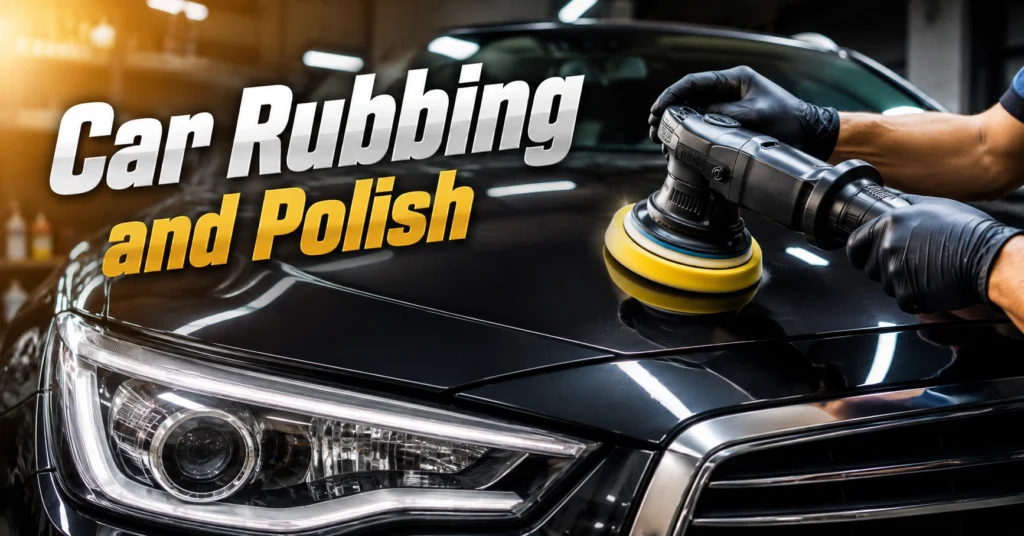
Does your car’s paint look dull, scratched, or faded even after regular washing?
Car rubbing and polishing can help restore the paint’s appearance and maintain a smoother, cleaner finish.
Daily driving exposes your car to dust, pollution, road grime, bird droppings, UV rays, water spots, and minor scratches. Over time, these contaminants can affect the paint surface and reduce its shine. Regular cleaning helps, but professional car rubbing and polishing can provide a deeper paint-care solution for your car.
What Is Car Rubbing and Polishing?
Car rubbing and polishing are two related paint-care processes that improve the appearance and condition of a vehicle’s exterior.
Car rubbing uses a mildly abrasive compound to work on the upper layer of the paint surface. It can help reduce the appearance of minor scratches, oxidation, swirl marks, water spots, and other surface imperfections.
Car polishing follows or complements rubbing by refining the paint surface and enhancing its smoothness and gloss. It can give the exterior a cleaner and more reflective appearance.
Although people often use the terms together, rubbing and polishing serve different purposes. Rubbing generally focuses more on correcting surface imperfections, while polishing focuses on refining and enhancing the finish.
How Does Car Rubbing and Polishing Protect Your Car’s Paint?
Car rubbing and polishing primarily help maintain the paint surface, with benefits including:
1. Removes Minor Surface Imperfections
Minor scratches, swirl marks, oxidation, and light paint imperfections can make a car look older than it actually is.
Car rubbing can carefully remove or reduce some of these surface-level defects by working on the affected portion of the clear coat. Polishing can then refine the surface and restore a smoother finish.
However, deep scratches that penetrate beyond the clear coat may require professional paint repair rather than rubbing and polishing.
2. Restores Paint Gloss
Exposure to sunlight, dust, pollution, and repeated washing can gradually make the paint look dull.
Polishing helps refine the surface and improve light reflection. As a result, the paint can regain some of its original gloss and look fresher.
This makes car polishing particularly useful when the vehicle has lost its shine but does not have significant paint damage.
3. Helps Reduce Oxidation
Paint oxidation can occur when the exterior remains exposed to environmental elements over time. Oxidised paint may develop a faded, chalky, or dull appearance.
Car rubbing can help remove certain superficial oxidised layers, while polishing can improve the finish afterward.
The effectiveness depends on the severity of oxidation and the condition of the existing paint.
4. Creates a Smoother Paint Surface
A smooth exterior makes it harder for dirt and contaminants to remain attached to the surface.
Rubbing and polishing can improve surface smoothness by removing minor imperfections and refining the finish. A smoother surface also makes the car easier to clean and helps maintain a better-looking exterior between washes.
5. Improves the Appearance of Swirl Marks
Improper washing techniques can create fine circular marks known as swirl marks.
These marks become particularly visible under direct sunlight and can make the paint appear hazy.
Professional polishing can reduce the visibility of light swirl marks by refining the upper paint surface. The result is a cleaner and more uniform finish.
6. Helps Maintain the Car’s Exterior Appearance
Your car’s exterior constantly faces environmental exposure. Delhi’s traffic, dust, pollution, intense sunlight, and changing weather can gradually affect the paint’s appearance.
Regular professional paint care can help maintain the exterior and prevent minor imperfections from making the vehicle look neglected.
What Is the Difference Between Car Rubbing and Car Polishing?
Understanding the difference helps you choose the right treatment.
| Car Rubbing | Car Polishing |
| Uses an abrasive compound | Uses a finer polishing compound |
| Focuses on surface correction | Focuses on refining the finish |
| Can reduce minor scratches and oxidation | Enhances gloss and smoothness |
| Removes a small amount of the surface layer | Generally provides a finer finishing treatment |
| Usually followed by polishing | Often follows rubbing during paint correction |
Professionals may recommend both treatments depending on the paint condition.
When Should You Get Car Rubbing and Polishing Done?
The right frequency depends on your car’s paint condition, driving environment, washing habits, and previous treatments.
Consider professional paint correction when you notice:
- Dull or faded paint
- Minor surface scratches
- Visible swirl marks
- Light oxidation
- Water spots
- Reduced paint gloss
- Uneven surface appearance
- Accumulated surface contaminants
Regular washing and proper drying techniques may be enough if your paint remains glossy and well-maintained.
Is Car Rubbing Safe for Your Car’s Paint?
Professional car rubbing can be safe when technicians use the correct compound, equipment, technique, and pressure for the paint condition.
However, rubbing is an abrasive process. Excessive or incorrect use can remove a more clear coat than necessary and potentially damage the finish.
That is why you should avoid aggressive DIY rubbing. A professional technician can inspect the paint first and determine whether rubbing is appropriate.
Can Car Rubbing and Polishing Remove Scratches?
Car rubbing and polishing can reduce or remove the appearance of minor surface scratches, particularly when the damage remains within the clear coat.
A simple way to understand this is to consider the depth of the scratch. If the scratch is superficial, paint correction may improve its appearance significantly. If it reaches the colour coat, primer, or metal underneath, rubbing and polishing alone cannot permanently repair it.
Deep scratches may require touch-up paint, repainting, or other professional bodywork.
How Does Car Rubbing and Polishing Help in Delhi?
Delhi’s driving environment can expose vehicles to several factors that affect exterior appearance.
Road dust, traffic pollution, intense sunlight, construction debris, bird droppings, and frequent exposure to changing weather can gradually reduce paint gloss.
Regular washing removes loose dirt, but contaminants and minor surface defects can still accumulate over time. Professional car rubbing and polishing in Delhi can help restore the appearance of vehicles that have developed light paint imperfections and dullness.
Proper washing and periodic paint inspection can help maintain the finish for longer for vehicles driven frequently through congested areas.
Car Rubbing and Polishing Process
Step 1: Exterior Cleaning
Technicians thoroughly clean the vehicle to remove dust, dirt, and other loose contaminants.
Step 2: Paint Inspection
The technician checks the paint for scratches, swirl marks, oxidation, stains, and other imperfections.
Step 3: Rubbing
If required, a suitable rubbing compound is applied using appropriate equipment to correct selected surface imperfections.
Step 4: Polishing
Technicians refine the surface using a finer polishing compound to improve smoothness and gloss.
Step 5: Final Inspection
The exterior is inspected under suitable lighting to ensure an even finish and identify any areas requiring additional attention.
Step 6: Paint Protection
Depending on the customer’s requirements, the vehicle may receive an additional protective treatment such as wax, sealant, ceramic coating, or another suitable paint-protection solution.
Rubbing and Polishing vs Waxing
Car rubbing, polishing, and waxing serve different purposes.
Rubbing primarily focuses on correcting certain surface imperfections.
Polishing refines the paint surface and enhances gloss.
Waxing adds a temporary protective layer over the paint and can provide water-repellent properties and additional shine.
Therefore, you should not consider rubbing and polishing a direct replacement for a dedicated paint-protection product.
How Can You Maintain Your Car’s Paint After Polishing?
Getting your car polished is only one part of paint maintenance. Your daily care routine also affects how long the finish stays attractive.
Follow these practices:
- Wash your car regularly using proper car-cleaning products.
- Avoid harsh household detergents.
- Use clean and soft microfiber towels.
- Do not wipe dust off a dry surface aggressively.
- Remove bird droppings and other contaminants promptly.
- Park in shade whenever possible.
- Avoid automatic washes that use abrasive brushes.
- Use a suitable paint-protection product when required.
- Get professional paint inspection when you notice fading or surface damage.
These habits can help reduce unnecessary wear on the paint surface.
Car rubbing and polishing can bring back your car’s shine, reduce minor surface imperfections, and refresh faded-looking paint. When professionals use the right products and techniques, these treatments can improve the exterior without unnecessary paint wear.
Looking for professional car rubbing and polishing near me?
Visit Auto Car Repair to get professional car service and repairs in Delhi NCR.
Frequently Asked Questions
1. Does car rubbing and polishing protect paint?
Car rubbing and polishing primarily improve and maintain the paint surface rather than create a permanent protective barrier. They can reduce minor imperfections, improve smoothness, and restore gloss. For longer-lasting protection, owners can consider suitable products such as waxes, sealants, or ceramic coatings after preparing the paint.
2. Can car polishing remove minor scratches?
Yes, professional polishing can reduce the appearance of some light scratches and swirl marks that remain within the clear coat. Deeper scratches usually require additional paint repair because polishing cannot restore missing paint.
3. Is car rubbing good for old cars?
Car rubbing can benefit older vehicles with dullness, light oxidation, and minor surface imperfections. However, technicians should inspect the paint before treatment because older or previously polished paint may have a thinner clear coat.
4. How long does car polishing last?
The visual improvement from polishing depends on the vehicle’s paint condition, washing routine, environmental exposure, and subsequent protection. Proper washing and the use of a suitable protective product can help maintain the finish for longer.
5. Can rubbing and polishing damage car paint?
Incorrect or overly aggressive rubbing can damage the paint or remove excessive clear coat. Professional technicians use appropriate compounds and techniques according to the condition of the paint, making professional assessment important.
Book Car Rubbing and Polishing at Auto Car Repair
Choose Auto Car Repair for reliable vehicle care backed by trained technicians, professional equipment, and quality workmanship. Whether your car needs paint-care attention or routine maintenance, our team can help maintain its appearance and performance.
Schedule your car service today!
| Showroom Location | Address | Call/Whatsapp Number | Nearby Locations |
| Moti Nagar | 57, Rama Rd, Block C, Najafgarh Road Industrial Area, New Delhi, Delhi, 110015 | 098704 00861 | Ramesh Nagar, Punjabi Bagh, Rajouri Garden, Mayapuri, Kirti Nagar, Janakpuri, Sudarshan Park, Chand Nagar, ESI, |
| Gurugram | Unit-1 Plot No 29 & 30, near, Kargil Shaheed Sukhbir Singh Yadav Marg, Info Technology Park, Sector 34, Gurugram, Haryana 122004 | 098104 46692 | Sec 37 Gurugram, Sec 37B Gurugram, Sec 72A Gurugram, Sec 74 Gurugram, Sec 35 Gurugram, Sec 36 Gurugram, |
| Noida | H-142, near Ananda Corporate Office, H Block, Sector 63, Noida, Uttar Pradesh 201309 | 097739 94175 | Noida 63, Noida 62, Noida 65, Noida 66, Gaur City 2, Indirapuram, |
| Okhla | ACR Automobiles Plot No. 1 – 8, DSIDC Sheds, Okhla Phase 2, New Delhi, 110020 | 092892 00643 | Okhla Phase 2, Sarita Vihar, Jasola Vihar, Govindpuri, Okhla Nsic, Nehru Palace, |
