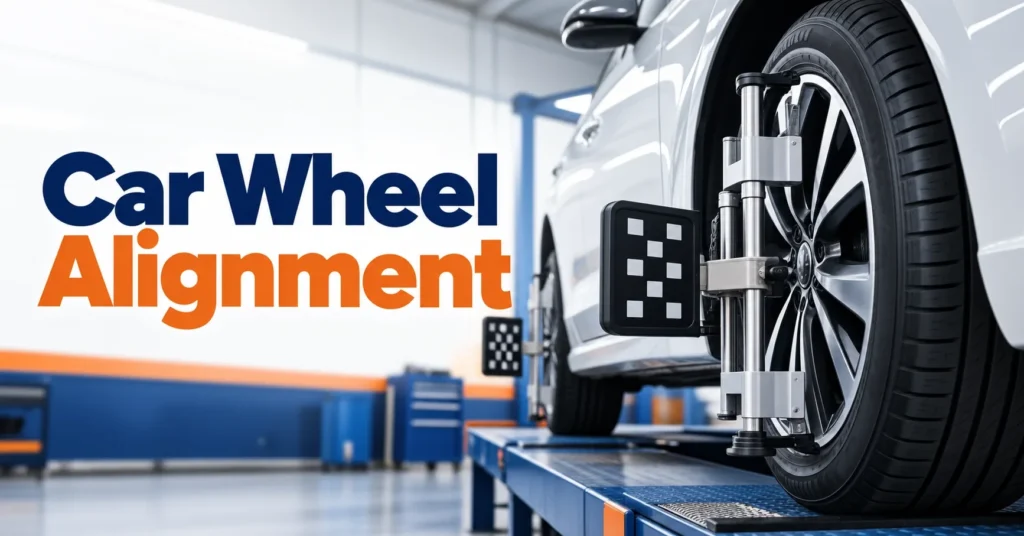
Tyres are among the most important components of your car, but their lifespan depends on much more than tyre quality alone. Driving habits, road conditions, tyre pressure, suspension health, and car wheel alignment all influence how quickly your tyres wear. When the wheels lose their correct alignment, tyres can start wearing unevenly and may require replacement much earlier than expected.
This problem becomes particularly relevant for drivers in Delhi NCR. Potholes, broken road surfaces, speed breakers, uneven patches, and frequent encounters with road edges can gradually disturb wheel alignment. Even when your tyres still have sufficient tread overall, excessive wear along one edge can make them unsuitable for continued use.
Regular car wheel alignment helps your tyres maintain more consistent contact with the road. It distributes wear more evenly, improves vehicle stability, and helps you get better value from every set of tyres.
What Is Car Wheel Alignment?
Car wheel alignment refers to adjusting the angles of the wheels according to the vehicle manufacturer’s specifications. The process ensures that the wheels maintain the correct position relative to the road, suspension, and each other.
Professional technicians generally assess three primary alignment angles:
Camber: This refers to the inward or outward tilt of the wheel when viewed from the front. Excessive positive or negative camber can cause one side of the tyre tread to wear faster.
Toe: This describes whether the front edges of the tyres point slightly inward or outward when viewed from above. Incorrect toe settings can cause rapid tyre wear because the tyres effectively scrub against the road while the vehicle moves.
Caster: Caster relates to the angle of the steering axis. Correct caster contributes to steering stability, straight-line control, and proper steering return.
A professional alignment service measures these angles and makes the necessary adjustments within the specifications applicable to your vehicle.
How Does Incorrect Wheel Alignment Increase Tyre Wear?
When your car wheels are correctly aligned, the tyres maintain consistent contact with the road, allowing the tread to wear evenly across the surface. However, even minor alignment issues can disrupt this contact and accelerate tyre wear.
For instance, excessive camber places additional pressure on either the inner or outer edge of the tyre, while incorrect toe causes the tyres to scrub against the road instead of rolling smoothly. Over time, these alignment issues can lead to significant and uneven tread loss.
As a result, one section of the tyre may reach its wear limit while the remaining tread still appears serviceable. Since partial tyre replacement is not possible, this uneven wear can force you to replace the entire tyre much earlier than expected, increasing overall tyre maintenance and replacement costs.
What are the Benefits of Timely Car Wheel Alignment?
1. Prevents Uneven Tyre Wear
One of the key benefits of proper car wheel alignment is that it prevents uneven tread wear and helps you get maximum usable life from your tyres.
When the wheels fall out of alignment, excessive pressure can develop on the inner or outer edges of the tyres, resulting in irregular wear patterns such as edge wear or feathering.
Correct wheel alignment keeps the tyres positioned at the recommended angles, allowing the tread to maintain balanced contact with the road. This distributes wear more evenly across the tyre surface instead of concentrating it in specific areas. As a result, you can utilise more of the available tread life and reduce the risk of replacing tyres prematurely.
Regular alignment checks can therefore contribute to longer tyre life and lower overall tyre replacement costs.
2. Helps Tyres Last Longer
Every tyre has a defined service life, but incorrect wheel alignment can significantly reduce how long it remains usable. Even a new set of premium tyres can develop uneven wear quickly if the wheels are not properly aligned, leading to premature replacement despite sufficient tread remaining in other areas.
Correct car wheel alignment ensures that the tyres roll at the recommended angles and maintain consistent contact with the road. This minimises unnecessary tread scrubbing and helps distribute wear more evenly across the tyre surface.
While tyre lifespan also depends on road conditions, driving habits, tyre pressure, vehicle load, tyre rotation, and suspension condition, maintaining proper alignment eliminates a major cause of premature wear. Regular alignment checks can therefore help extend the usable life of your tyres and reduce long-term replacement costs.
3. Protects Your Investment in New Tyres
Replacing a complete set of tyres can be a significant maintenance expense, especially for SUVs, premium vehicles, and cars equipped with larger wheels. This makes car wheel alignment particularly important when installing new tyres.
If your previous car tyres developed uneven wear due to incorrect alignment, fitting a new set without correcting the underlying issue can cause the same wear pattern to develop again. As a result, even brand-new tyres may lose usable tread earlier than expected.
A professional car wheel alignment ensures that the wheels remain positioned according to the vehicle manufacturer’s recommended specifications. This allows the new tyres to maintain balanced road contact, wear more evenly, and deliver their intended performance throughout their usable life.
Therefore, proper wheel alignment should be considered an important step in protecting your investment in new tyres. It helps prevent avoidable tread damage, supports consistent tyre performance, and reduces the likelihood of premature replacement.
4. Reduces Excessive Tread Scrubbing
Tyres perform best when they roll smoothly and maintain consistent contact with the road. However, incorrect wheel alignment can cause the tyres to move at slightly improper angles, creating unnecessary friction or a continuous scrubbing effect against the road surface.
Although this resistance may not always be noticeable while driving, it can gradually wear away the tyre tread with every kilometre travelled. Over time, this additional friction can accelerate tread loss and shorten the tyre’s usable life.
Proper car wheel alignment keeps the wheels positioned at the correct angles, reduces unnecessary lateral forces, and allows the tyres to roll more efficiently. By minimising excessive scrubbing, alignment helps preserve tread depth and promotes more consistent tyre wear.
5. Prevents One Tyre from Wearing Faster Than Others
Wheel misalignment does not always affect all four tyres equally. In many cases, one tyre may experience significantly more wear than the others. For example, a front tyre may develop excessive inner-edge or outer-edge wear while the tyre on the opposite side remains in relatively good condition.
This uneven wear can complicate tyre replacement because tyres on the same axle should ideally maintain similar tread depth and overall condition for balanced performance.
Regular car wheel alignment helps distribute tyre wear more consistently by keeping each wheel at the recommended angle. When combined with proper tyre pressure and timely tyre rotation, correct alignment can help prevent premature individual tyre wear, support balanced performance, and allow you to plan tyre replacements more efficiently.
6. Helps Detect Suspension Problems Early
A wheel alignment inspection can sometimes reveal problems beyond alignment settings.
Worn suspension bushes, damaged steering components, bent parts, weak ball joints, or other mechanical issues can affect wheel geometry. In some cases, technicians cannot achieve or maintain correct alignment until they repair the underlying component.
Identifying these issues early can prevent them from continuously damaging your tyres.
For example, repeatedly performing alignment without addressing a worn suspension component may only provide temporary improvement. A comprehensive inspection helps identify why the alignment changed and whether additional repairs are necessary.
This approach can protect both your tyres and other related vehicle components.
7. Reduces the Impact of Delhi NCR Road Conditions
Delhi NCR driving conditions can be demanding on wheel alignment.
Potholes, uneven roads, construction zones, broken surfaces, sharp speed breakers, and accidental contact with kerbs can disturb wheel geometry. A severe impact may change alignment immediately, while repeated smaller impacts can gradually push it outside the recommended range.
Periodic inspections become especially useful for cars frequently driven over rough roads. Correcting alignment before abnormal wear becomes severe can help prevent an expensive tyre replacement later.
8. Supports More Effective Tyre Rotation
Tyre rotation helps promote even tread wear because the front and rear tyres experience different loads, steering forces, and driving conditions. However, tyre rotation cannot correct problems caused by improper wheel alignment.
Maintaining proper car wheel alignment alongside regular tyre rotation helps ensure that each tyre maintains balanced road contact. Together, these maintenance practices promote more uniform tread wear, extend usable tyre life, and reduce the risk of premature tyre replacement.
For better tyre maintenance, drivers should combine:
- Correct tyre pressure
- Timely tyre rotation
- Periodic wheel alignment checks
- Wheel balancing when required
- Regular suspension and steering inspections
These practices help tyres wear more consistently and reduce avoidable replacement expenses.
9. Helps Maintain Predictable Vehicle Handling
Poor wheel alignment may cause your car to pull toward one side, feel unstable, require frequent steering correction, or behave differently during cornering. Unevenly worn tyres can further affect road contact, particularly during braking or wet-weather driving.
Correct alignment helps the vehicle track more predictably and allows tyres to maintain the contact pattern intended by the manufacturer.
By addressing alignment problems early, you protect tyre life while also supporting better steering stability and driving confidence.
10. Prevents Small Problems from Becoming Expensive
A minor alignment deviation may initially cause little noticeable change in driving behaviour. However, after several thousand kilometres, the tyre may develop substantial edge wear. By the time you identify the problem, correcting the alignment cannot restore the rubber already lost.
Identifying and correcting wheel alignment problems early can cost significantly less than replacing tyres prematurely. It also allows technicians to investigate whether pothole damage, worn suspension parts, or steering components caused the misalignment.
What Are the Signs Your Car Needs Wheel Alignment?
Your car can show clear signs of improper wheel alignment, so you do not always have to wait until the next scheduled service to get it checked.
Consider booking a car wheel alignment inspection if you notice:
- Uneven wear across the tyre tread
- Excessive wear on the inner or outer tyre edges
- Car pulling noticeably to one side
- Steering wheel sitting off-centre while driving straight
- Frequent steering corrections on a level road
- Unusual tyre wear shortly after installing new tyres
- Changes in handling after hitting a pothole or kerb
Some of these symptoms can also result from tyre pressure, balancing, steering, suspension, road camber, or tyre-related issues. A professional inspection can determine the actual cause.
When Should You Get Car Wheel Alignment Checked?
A practical approach is to check the manufacturer’s recommendations and have the alignment inspected whenever you notice unusual tyre wear or changes in vehicle behaviour.
You should also consider an alignment check:
After hitting a major pothole: A strong impact can disturb wheel geometry.
After installing new tyres: This helps prevent an existing alignment problem from damaging the new tread.
After suspension or steering repairs: Replacing certain components can affect wheel geometry and require realignment.
After hitting a kerb: Even a relatively low-speed impact may alter alignment.
When the steering feels different: Pulling, an off-centre steering wheel, or unusual handling deserves inspection.
Regular tyre inspections can help you identify alignment-related wear before it becomes irreversible.
Wheel Alignment Cost vs Tyre Replacement Cost
Many car owners postpone wheel alignment because they consider it an additional maintenance expense. However, comparing the wheel alignment cost with the expense of premature tyre replacement highlights its long-term value.
Wheel alignment is a preventive maintenance service that helps tyres wear evenly and achieve their optimal usable life. In contrast, replacing one or more tyres prematurely can result in a considerably higher expense, particularly for vehicles with larger or premium tyres.
The actual wheel alignment cost can vary depending on the vehicle type, wheel and suspension configuration, workshop equipment, required adjustments, and any underlying steering or suspension issues. Instead of selecting a service provider based solely on price, consider the quality of alignment equipment, technician expertise, and inspection process.
A professionally performed wheel alignment can help maximise the usable life of your existing tyres while protecting new tyres from premature and uneven wear, potentially reducing overall tyre replacement costs.
Wheel Alignment vs Wheel Balancing: Are They the Same?
No. Wheel alignment and wheel balancing address different problems.
Wheel alignment corrects the angles at which the wheels sit and travel relative to the vehicle and road.
Wheel balancing corrects uneven weight distribution in the tyre-and-wheel assembly. An imbalance often produces vibration, particularly at certain speeds.
A car can require alignment, balancing, or both. Performing balancing alone will not correct alignment-related tyre wear, just as alignment cannot correct an imbalanced wheel assembly.
A professional inspection can identify which service your vehicle actually requires.
How Can You Maximise Tyre Life Along with Wheel Alignment?
Proper alignment works best as part of a complete tyre maintenance routine.
Check tyre pressure regularly and maintain the pressure recommended by the vehicle manufacturer. Inspect tread surfaces for cuts, bulges, embedded objects, and uneven wear. Rotate tyres according to applicable manufacturer or tyre recommendations, and investigate steering or suspension symptoms instead of ignoring them.
Your driving style also matters. Hard acceleration, aggressive cornering, sudden braking, and hitting potholes at speed can increase tyre and suspension stress.
Combining responsible driving with preventive maintenance helps reduce avoidable tyre wear and gives you better long-term value from your tyres.
Proper car wheel alignment can reduce tyre replacement costs by preventing uneven tread wear, limiting unnecessary tyre scrubbing, supporting consistent wear across the wheels, and protecting new tyres from premature damage. It can also help identify steering or suspension issues that might otherwise continue damaging your car tyres.
Visit Auto Car Repair for professional car wheel alignment, where our experienced technicians inspect and correct your vehicle’s wheel geometry while checking the tyres, steering, and suspension to ensure smoother handling, improved safety, and better tyre performance.
FAQs
1. How does car wheel alignment increase tyre life?
Correct wheel alignment keeps the tyres positioned at the appropriate angles so the tread contacts the road more evenly. This reduces excessive edge wear and unnecessary scrubbing. Along with correct tyre pressure, rotation, and responsible driving, proper alignment can help you use more of the tyre’s available tread before replacement becomes necessary.
2. How do I know if my car’s wheel alignment is incorrect?
Common signs include uneven tyre wear, excessive inner or outer edge wear, the vehicle pulling to one side, an off-centre steering wheel, and frequent steering corrections. If you notice any of these symptoms, get the tyres, alignment, steering, and suspension inspected to identify the actual cause.
3. What factors affect wheel alignment cost?
Wheel alignment cost can vary according to vehicle type, wheel and suspension configuration, workshop equipment, required adjustments, and whether worn or damaged steering and suspension components need attention. A professional inspection should identify the cause of misalignment before technicians make the necessary corrections.
4. Should I get wheel alignment after installing new tyres?
An alignment check is sensible when fitting new tyres, particularly if the previous set showed uneven wear or the vehicle had steering-related symptoms. Correcting an existing alignment problem helps prevent the fresh tyres from developing the same abnormal tread pattern and protects your investment in the new set.
5. Can potholes affect car wheel alignment?
Yes. A strong pothole impact can disturb wheel alignment and may also affect tyres, wheels, steering, or suspension components. If your car starts pulling, the steering wheel becomes off-centre, or you notice unusual tyre wear after hitting a pothole, arrange a professional inspection.
Book your car service at Auto Car Repair for expert and reliable servicing in Delhi NCR.
| Showroom Location | Address | Call/Whatsapp Number | Nearby Locations |
| Moti Nagar | 57, Rama Rd, Block C, Najafgarh Road Industrial Area, New Delhi, Delhi, 110015 | 098704 00861 | Ramesh Nagar, Punjabi Bagh, Rajouri Garden, Mayapuri, Kirti Nagar, Janakpuri, Sudarshan Park, Chand Nagar, ESI, |
| Gurugram | Unit-1 Plot No 29 & 30, near, Kargil Shaheed Sukhbir Singh Yadav Marg, Info Technology Park, Sector 34, Gurugram, Haryana 122004 | 098104 46692 | Sec 37 Gurugram, Sec 37B Gurugram, Sec 72A Gurugram, Sec 74 Gurugram, Sec 35 Gurugram, Sec 36 Gurugram, |
| Noida | H-142, near Ananda Corporate Office, H Block, Sector 63, Noida, Uttar Pradesh 201309 | 097739 94175 | Noida 63, Noida 62, Noida 65, Noida 66, Gaur City 2, Indirapuram, |
| Okhla | ACR Automobiles Plot No. 1 – 8, DSIDC Sheds, Okhla Phase 2, New Delhi, 110020 | 092892 00643 | Okhla Phase 2, Sarita Vihar, Jasola Vihar, Govindpuri, Okhla Nsic, Nehru Palace, |