Tyres naturally wear every time you drive, but they should wear as evenly as possible across the tread. When wheel alignment moves outside the correct specifications, one section of a tyre may carry or scrub against the road more than intended. Over hundreds of kilometres, this uneven wear can shorten tyre life and lead to replacement earlier than expected.
Proper Car Wheel Alignment helps the wheels maintain the angles specified for the vehicle. It supports even tyre contact with the road, predictable steering and stable handling. For drivers in Delhi NCR, regular alignment checks can be particularly useful because potholes, uneven roads, speed breakers and occasional kerb impacts can disturb alignment over time.
Find below how maintaining correct wheel alignment can help protect your tyres and reduce avoidable long-term replacement costs.
What Is Car Wheel Alignment?
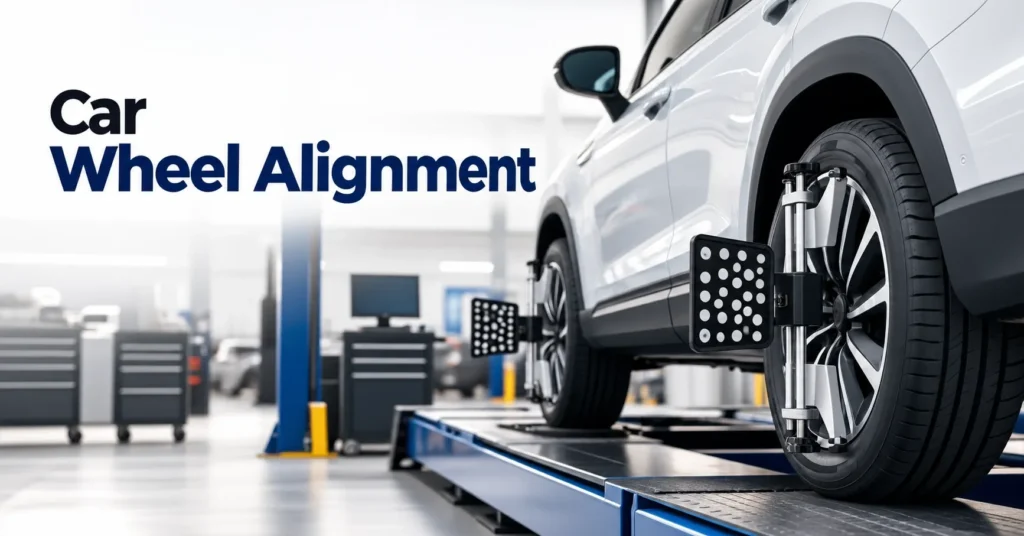
Car Wheel Alignment is the process of checking and adjusting the angles at which the wheels sit relative to the vehicle and the road.
Technicians primarily examine three alignment angles: camber, toe and caster.
Camber describes the inward or outward tilt of a wheel when viewed from the front. Excessive positive or negative camber can cause one side of the tyre tread to wear faster.
Toe refers to whether the wheels point slightly inward or outward when viewed from above. Incorrect toe can cause the tyres to scrub across the road surface instead of rolling efficiently.
Caster relates to the steering axis and contributes to steering stability and return-to-centre behaviour.
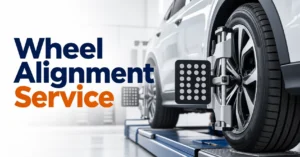
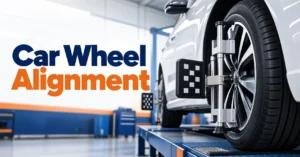
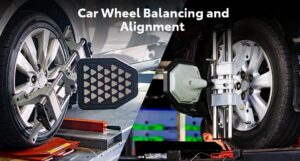
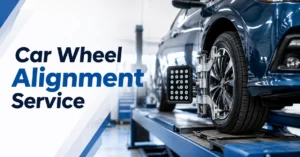
A professional alignment machine measures these angles and allows technicians to compare them with the manufacturer’s specified range.
How Does Incorrect Wheel Alignment Increase Tyre Wear?
A correctly aligned tyre rolls with its tread positioned appropriately against the road.
When alignment changes, the tyre may no longer maintain the intended contact pattern. Instead of distributing wear evenly, one part of the tread can experience greater friction.
Incorrect toe, for example, can make the tyre continuously scrub slightly sideways as the vehicle travels forward. The effect may not always be obvious from the driver’s seat, but it can gradually remove tread from the tyre.
Incorrect camber can concentrate wear toward the inner or outer edge.
As kilometres accumulate, these small alignment errors can create substantial differences in tread depth. A tyre may eventually require replacement even though another part of its tread still has usable depth.
Correct Car Wheel Alignment helps prevent this avoidable loss of tyre life.
How Does Even Tyre Contact Help Tyres Last Longer?
Tyres perform best when the tread maintains appropriate contact with the road.
Correct alignment helps distribute the forces acting on the tyre more consistently across its tread. This allows the tyre to wear more evenly during acceleration, braking and cornering.
Imagine a tyre with substantial tread remaining through the centre but a badly worn inner shoulder. Even though much of the tyre appears usable, excessive wear in one area can make replacement necessary.
Proper alignment reduces the likelihood of this type of premature uneven wear.
However, alignment is only one factor affecting tyre life. Tyre pressure, rotation, suspension condition, driving habits, road quality and vehicle load also influence wear.
Maintaining all of these factors together gives tyres a better chance of reaching their expected service life.
What Tyre Wear Patterns Can Indicate Alignment Problems?
Common patterns associated with alignment or related suspension problems include inner-edge wear, outer-edge wear and feathering.
Inner-edge wear means the inside shoulder of the tyre is wearing considerably faster than the rest of the tread. Outer-edge wear affects the opposite side. Either pattern can be associated with incorrect alignment, although tyre pressure and suspension problems should also be considered.
Feathering occurs when the tread blocks feel smoother on one edge and sharper on the other. Incorrect toe is one possible cause.
Drivers should not attempt to diagnose alignment based only on tyre appearance. A professional inspection can determine whether the wear comes from alignment, pressure, worn suspension components or another issue.
Finding the cause early can prevent additional tread from being lost unnecessarily.
How Can Wheel Alignment Delay Tyre Replacement?
Tyres usually represent a significant maintenance expense, particularly when several need replacement together.
Suppose one tyre develops severe inner-edge wear because of incorrect alignment. By the time the problem becomes visible from the outside, that section may already be substantially worn.
Replacing only one tyre may not always be the appropriate solution either. Depending on tyre condition, tread-depth differences, vehicle requirements and manufacturer recommendations, replacement in axle pairs or other configurations may be advisable.
This can turn one alignment problem into a considerably larger tyre expense.
Regular Car Wheel Alignment checks help identify geometry problems before excessive uneven wear develops. By protecting the usable tread across the tyre, alignment can help drivers get more value from tyres they have already purchased.
Why Should You Check Wheel Alignment After Hitting a Pothole?
Delhi NCR roads can expose vehicles to potholes, damaged road surfaces and abrupt level changes.
A significant pothole impact can place considerable force on a wheel, tyre and suspension. In some situations, this can alter alignment settings or damage a related component.
The vehicle may continue driving normally enough that the driver does not immediately notice a problem.
After a strong pothole impact, pay attention to changes in steering behaviour. If the car starts pulling to one side, the steering wheel no longer sits straight or unusual tyre wear develops, an inspection is advisable.
A car wheel alignment check can determine whether the angles remain within specification.
Can Speed Breakers Affect Car Wheel Alignment?
Crossing a normal speed breaker carefully should not automatically cause an alignment problem.
However, repeatedly hitting large or poorly designed speed breakers at excessive speed can place additional stress on tyres, wheels and suspension components. Over time, such impacts may contribute to changes in vehicle geometry or expose existing suspension problems.
Approaching speed breakers at an appropriate speed reduces unnecessary impact.
If you notice a change in steering behaviour after a particularly severe impact, have the vehicle inspected rather than assuming the problem will correct itself.
Why Should Wheel Alignment Be Checked When Installing New Tyres?
New tyres represent an investment, so fitting them to a vehicle with incorrect alignment can immediately start wearing away that investment.
If the old tyres developed uneven wear, the cause should be investigated before or when installing the replacements. Simply fitting new tyres without correcting an existing alignment issue may cause the same wear pattern to return.
An alignment check helps confirm whether the wheels sit within the correct specifications.
It can also identify situations where an adjustment cannot be completed correctly because a suspension or steering component requires attention.
Starting with correct alignment allows new tyres to operate under better conditions from the beginning.
How Often Should Car Wheel Alignment Be Checked?
There is no single interval that applies equally to every vehicle and driving environment.
The appropriate inspection schedule depends on manufacturer recommendations, road conditions, annual mileage and how the vehicle is driven.
Instead of relying only on a fixed kilometre interval, drivers should also watch for situations that justify an earlier inspection.
Consider checking alignment when:
- The vehicle pulls consistently to one side
- The steering wheel sits off-centre
- Tyres show unusual inner or outer wear
- You notice feathering across the tread
- The vehicle hits a severe pothole or kerb
- Steering or suspension components have been repaired
- New tyres are being installed, particularly if the old tyres wore unevenly
Regular tyre inspections can help identify these signs before the damage becomes severe.
Why Should Suspension Components Be Checked Before Alignment?
Wheel alignment depends on the condition of the steering and suspension system.
Components such as tie rods, ball joints, control arms, bushes and wheel bearings help maintain wheel position. If a component is excessively worn or damaged, simply adjusting the alignment may not provide a lasting solution.
For example, if worn suspension components allow a wheel to move beyond its intended position while driving, the alignment readings may change under load.
A professional workshop should therefore inspect relevant components when symptoms or alignment measurements indicate a possible mechanical issue.
Repairing the underlying problem before final alignment helps ensure that the adjustment delivers the intended result.
How Can Wheel Alignment Reduce Long-Term Tyre Costs?
The financial benefit of alignment comes primarily from preventing premature tyre replacement.
Consider a vehicle whose tyres could otherwise provide substantial usable service life. If poor alignment destroys the inner edges significantly earlier, the owner loses part of the value already paid for those tyres.
The expense becomes even greater when multiple tyres develop similar damage.
A timely Car Wheel Alignment service generally costs considerably less than replacing tyres prematurely because of avoidable uneven wear.
The exact savings cannot be predicted because tyre prices, driving distances, alignment condition and tyre wear vary from one vehicle to another. However, protecting the full usable tread is one of the simplest ways to improve the value obtained from a tyre set.
Proper Car Wheel Alignment can reduce long-term tyre costs by helping the tread wear more evenly and preventing one section of a tyre from deteriorating prematurely. Correct wheel angles reduce unnecessary tyre scrub and help tyres maintain appropriate contact with the road.
For Delhi NCR drivers, potholes, uneven roads, kerb impacts and demanding conditions make regular tyre and alignment inspections particularly useful. Checking alignment after a significant impact, when unusual tyre wear appears or when steering behaviour changes can help identify problems before they cause substantial tread loss.
Wheel alignment should also work alongside correct tyre pressure, rotation and suspension maintenance. Together, these measures can help drivers use more of the available tyre life and avoid premature replacement expenses.
Get Your Wheel Alignment Checked at Auto Car Repair
Noticing uneven tyre wear, an off-centre steering wheel or your car pulling to one side?
Visit Auto Car Repair for a professional Car Wheel Alignment inspection. Our team can check your car tyres, steering and alignment condition, identify the cause of irregular wear and make the required adjustments.
Find your nearest Auto Car Repair centre and get your wheel alignment checked before uneven wear leads to unnecessary tyre replacement.
| Showroom Location | Address | Call/Whatsapp Number | Nearby Locations |
| Moti Nagar | 57, Rama Rd, Block C, Najafgarh Road Industrial Area, New Delhi, Delhi, 110015 | 098704 00861 | Ramesh Nagar, Punjabi Bagh, Rajouri Garden, Mayapuri, Kirti Nagar, Janakpuri, Sudarshan Park, Chand Nagar, ESI, |
| Gurugram | Unit-1 Plot No 29 & 30, near, Kargil Shaheed Sukhbir Singh Yadav Marg, Info Technology Park, Sector 34, Gurugram, Haryana 122004 | 098104 46692 | Sec 37 Gurugram, Sec 37B Gurugram, Sec 72A Gurugram, Sec 74 Gurugram, Sec 35 Gurugram, Sec 36 Gurugram, |
| Noida | H-142, near Ananda Corporate Office, H Block, Sector 63, Noida, Uttar Pradesh 201309 | 097739 94175 | Noida 63, Noida 62, Noida 65, Noida 66, Gaur City 2, Indirapuram, |
| Okhla | ACR Automobiles Plot No. 1 – 8, DSIDC Sheds, Okhla Phase 2, New Delhi, 110020 | 092892 00643 | Okhla Phase 2, Sarita Vihar, Jasola Vihar, Govindpuri, Okhla Nsic, Nehru Palace, |