Can a dent, scratch, or damaged body panel affect more than just your car’s appearance?
Yes. Everyday traffic, tight parking spaces, minor collisions, road debris, and accidental impacts can leave dents, scratches, chipped paint, and damaged panels on your vehicle. While some damage may initially appear cosmetic, exposed metal and cracked paint can leave the affected area vulnerable to moisture and corrosion.
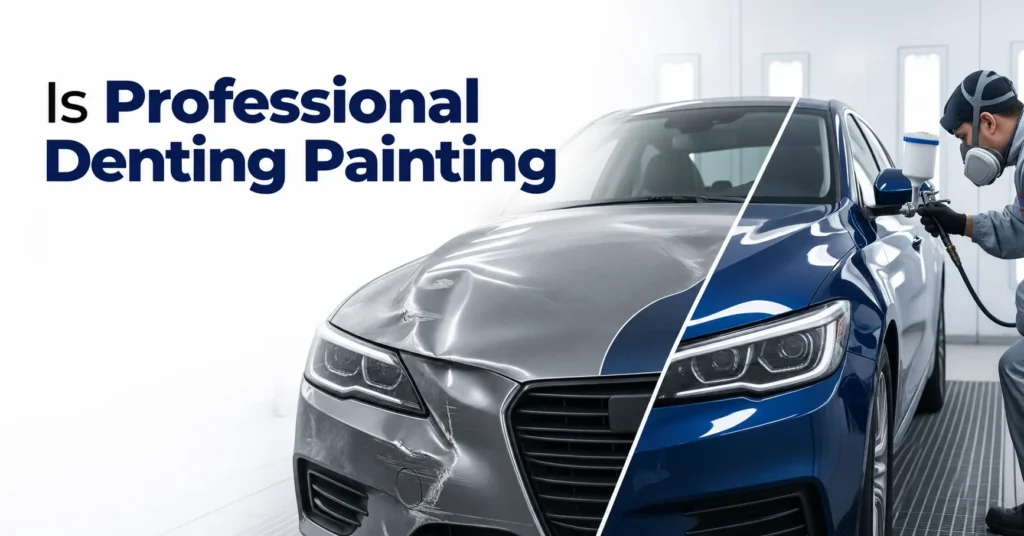
Professional Denting Painting addresses both the shape of the damaged panel and its exterior finish. Technicians assess the damage, restore the panel as closely as practical to its original form, prepare the surface, match the paint colour, apply the required paint layers, and finish the repaired area for a consistent appearance.
Find below how professional denting and painting repairs different types of car body damage.
What Is Car Denting Painting?
Car Denting Painting combines body repair and refinishing to restore damaged exterior panels.
Denting focuses on correcting the physical shape of a panel after it develops dents, creases, or deformation. Painting restores the surface finish when an impact has scratched, chipped, cracked, or otherwise damaged the paint.
A professional repair may therefore involve several stages rather than simply applying fresh paint over the affected area.
Technicians first inspect the damage and determine the appropriate repair method. They then correct the panel, prepare its surface, apply suitable primers and paint layers, and finish the repaired area.
The exact process depends on the location, depth, size, and severity of the damage.
What Types of Car Body Damage Can Denting Painting Repair?
Professional denting and painting can address many common forms of exterior damage, including:
- Minor and moderate dents
- Body panel creases
- Scratches and scuff marks
- Chipped or peeling paint
- Parking-related damage
- Minor collision damage
- Damaged bumpers and body panels
- Paint damage that exposes the underlying surface
- Localised surface imperfections
A shallow dent with intact paint needs a different approach from a deeply creased panel with extensive paint damage.
A professional inspection helps technicians determine the extent of the damage before starting repairs.
How Do Technicians Assess Car Body Damage Before Repair?
A good repair starts with a detailed inspection.
Technicians examine the affected panel to understand the size and depth of the dent, condition of the paint, accessibility behind the panel, and whether the impact has affected nearby components.
They also look for cracked paint, exposed metal, panel misalignment, broken clips, damaged mouldings, and other signs that may not be immediately noticeable.
This assessment helps determine whether technicians can repair the existing panel or whether severe damage requires a different approach.
Professional technicians focus on correcting the actual damage rather than simply hiding visible imperfections.
How Does the Denting Process Restore a Damaged Panel?
The denting process carefully restores the damaged body panel to its original shape and contours, helping achieve proper alignment and a smooth finish.
Depending on the type and location of the damage, technicians may access the panel from behind and carefully work the dent outward. Other damage may require specialised pulling equipment and body repair tools.
Technicians gradually reshape the affected section while checking its alignment with surrounding body lines.
This stage requires precision because excessive force can stretch or further deform the metal. Skilled technicians therefore work progressively to restore the panel while maintaining its original contours as closely as possible.
Can Denting Painting Repair Deep Dents and Creases?
Professional Denting Painting can repair many deeper dents and creases, but the repair method depends on the extent of the damage.
Deep dents may distort a larger section of the panel and damage the paint at the same time. Technicians first reshape the panel and correct the affected contours. Where required, they may use an appropriate body filler in small amounts to achieve a smooth and even surface before refinishing.
However, extremely severe damage may make panel replacement more appropriate than repair.
A professional assessment helps determine the most suitable solution based on the panel’s condition rather than relying only on how the damage appears from outside.
Why Is Surface Preparation Important Before Painting?
Painting directly over a damaged surface will not produce a durable or consistent finish.
After completing the dent repair, technicians prepare the surface for refinishing. This may involve sanding damaged paint, smoothing repaired sections, cleaning the surface, and removing contaminants.
Proper surface preparation creates a stable and uniform base for the subsequent coating layers.
Technicians also need to remove dust, grease, moisture, and loose material because contaminants can interfere with paint adhesion and affect the final finish.
Good preparation may not be the most visible stage of Denting Painting, but it plays an important role in the quality of the completed repair.
Why Do Technicians Use Primer During Denting Painting?
Primer creates a uniform foundation that improves paint adhesion and prepares the repaired surface for a consistent finish.
Depending on the repair, technicians use appropriate primer systems to create a uniform base, support paint adhesion, and provide additional protection to prepared surfaces.
After applying the primer, technicians allow it to cure according to the product requirements and then refine the surface before painting.
Skipping or rushing this stage can affect the appearance and durability of the final finish.
Professional Denting Painting therefore follows the correct preparation sequence instead of focusing only on the visible topcoat.
How Do Professionals Match Your Car’s Paint Colour?
Colour matching is one of the most important parts of professional denting and painting.
Cars have specific manufacturer paint codes that provide a starting point for identifying the correct colour. However, technicians may need to consider the existing condition and appearance of the vehicle’s paint because exposure to sunlight, weather, washing, and age can influence how the colour appears.
Professional body repair centres use colour-matching systems and controlled paint-mixing processes to achieve a close match with the surrounding panels.
The goal is to make the repaired section blend naturally with the rest of the vehicle rather than appearing like a visibly repainted patch.
How Do Technicians Apply Paint After Dent Repair?
Once technicians prepare the surface and confirm the colour match, they apply the required paint system under suitable conditions.
The refinishing process generally involves applying the appropriate colour coat followed by a clear coat where required by the paint system.
Technicians apply controlled layers rather than attempting to cover the surface with one heavy application. This approach helps achieve consistent coverage and a smoother finish.
A professional paint environment also helps minimise contamination from airborne dust and debris while technicians work on the vehicle.
What Does the Clear Coat Do?
The clear coat forms the outer transparent layer over the colour coat in common automotive paint systems.
It contributes to the gloss and appearance of the finish while helping protect the underlying colour layer from everyday environmental exposure.
A properly applied clear coat also helps the repaired area achieve a finish that is consistent with the surrounding paintwork.
Proper clear coat application and curing help the repaired surface withstand regular exposure to sunlight, changing weather, washing, dust, and environmental contaminants while maintaining the finish quality.
How Does Professional Denting Painting Help Prevent Rust?
Automotive paint serves both aesthetic and protective purposes. A properly applied coating system forms a protective barrier over metal body panels, helping shield them from moisture, contaminants, and environmental exposure.
When a deep scratch, chip, or collision removes protective coatings and exposes bare metal, moisture and environmental contaminants can reach the surface. Over time, this can contribute to corrosion.
Professional Denting Painting removes or treats affected surfaces, prepares the surface, and restores the necessary coating layers.
Addressing exposed metal promptly can therefore help protect the panel while restoring its appearance.
Why Should You Repair Chipped or Cracked Paint Promptly?
Small areas of paint damage can become more noticeable if drivers leave them unattended.
A deep chip or scratch may expose underlying layers, while cracked paint around a dent can allow moisture and contaminants to reach the damaged surface.
Delhi NCR vehicles regularly encounter dust, road debris, intense sunlight, rain, pollution, and seasonal weather changes. Maintaining intact exterior coatings helps protect body panels from these everyday conditions.
Timely Denting Painting can address the damaged area before deterioration makes the repair more extensive.
Can Denting Painting Fix Parking Damage?
Parking-related damage is one of the most common reasons drivers require body repairs.
Tight parking spaces, pillars, walls, gates, shopping trolleys, and nearby vehicles can leave scratches, dents, and scuffs on doors, bumpers, fenders, and quarter panels.
Professional technicians assess whether the damage affects only the paint or has also changed the panel’s shape.
They can then repair the dent, prepare the damaged surface, and refinish the affected area as required. This restores a cleaner exterior appearance without treating every parking mark in exactly the same way.
Can Professional Denting Painting Repair Accident Damage?
Professional body repair centres can address many types of minor and moderate accident-related exterior damage.
An impact may affect more than one component. For example, a damaged bumper may sit beside a dented fender, scratched door, or misaligned body panel.
Technicians therefore inspect the complete affected area rather than repairing only the most visible dent.
If the collision may have affected structural, mechanical, suspension, steering, sensor, or safety-related components, the vehicle requires appropriate inspection and repair beyond cosmetic Denting Painting.
This distinction ensures that technicians address both visible body damage and any additional concerns requiring attention.
Is Denting Painting Different from Paint Touch-Up?
Yes. The two services address different levels of damage.
A paint touch-up generally targets small chips or limited surface imperfections. Full denting and painting may involve panel reshaping, sanding, surface correction, primer, colour application, clear coating, curing, and final finishing.
If a scratch has penetrated deeply or the panel itself has developed a dent, a simple touch-up may not adequately address the damage.
A technician should inspect the affected area before recommending the appropriate repair.
Why Does Professional Equipment Matter in Denting Painting?
Professional body repair requires more than basic hand tools and a can of matching paint.
A properly equipped workshop may use specialised dent-repair equipment, sanding tools, paint-mixing systems, spray equipment, controlled painting areas, curing equipment, and finishing tools.
These resources help technicians maintain greater control during different stages of the repair.
How Long Does Professional Denting Painting Take?
The repair time varies according to the type and extent of body damage.
A small localised repair may require less time than a vehicle with multiple damaged panels. Deep dents, extensive scratches, replacement parts, colour-matching requirements, drying or curing time, and additional repairs can all affect the overall turnaround time.
Quality body repair also involves multiple stages, and technicians need sufficient time to complete preparation and curing correctly.
What Should You Look for When Searching for Denting Painting Near Me?
When searching for Denting Painting Near Me, look beyond convenience and price.
Choose a workshop that carefully inspects the damage, explains the recommended repair, uses appropriate equipment, follows proper surface-preparation procedures, and has experienced technicians.
You should also consider the workshop’s approach to colour matching, paint application, quality checks, and communication before approving the repair.
Auto Car Repair provides professional denting and painting services with a structured approach to body repair and refinishing. Our experienced technicians carefully assess the damage and follow appropriate repair, surface preparation, colour matching, painting, and quality-check procedures to help restore your car’s exterior finish.
Professional Denting Painting follows a structured process to restore damaged body panels and their exterior finish. Technicians inspect the affected area, reshape dented panels, prepare and smooth the surface, apply suitable primers, match the vehicle’s paint colour, apply the required paint system, and complete the repair with finishing and quality checks.
The exact process varies according to the severity and location of the damage. A professional approach focuses not only on making the dent less visible but also on restoring the panel’s shape, paint finish, and protective coating system as effectively as possible.
Book your car denting painting service at Auto Car Repair in Delhi NCR for expert repairs and servicing.
FAQs
1. What does car Denting Painting include?
Professional Denting Painting can include damage inspection, dent correction, surface preparation, sanding, primer application, colour matching, paint application, clear coating, curing, finishing, and quality checks. The exact process depends on the type, location, and severity of the damage to your vehicle.
2. Can Denting Painting repair deep scratches?
Yes, professional Denting Painting can address many deep scratches, particularly when they have damaged multiple layers of the vehicle’s finish. Technicians assess the depth of the scratch, prepare the affected surface, restore the required coating layers, and refinish the area to achieve a consistent appearance.
3. Does Denting Painting help prevent rust?
Yes. If damage exposes the underlying metal, professional repair can help protect the affected panel by restoring the appropriate coating system. Addressing exposed metal promptly reduces its continued exposure to moisture and environmental contaminants that can contribute to corrosion over time.
4. Should I repair small dents and scratches immediately?
Minor dents with intact paint may be primarily cosmetic, but deep scratches, chipped paint, cracked coatings, or exposed metal should receive timely attention. Repairing this damage can restore your car’s appearance and help protect the affected surface from further environmental exposure.
5. How do I choose Denting Painting Near Me?
When searching for Denting Painting Near Me, choose a workshop with experienced technicians, suitable body-repair equipment, proper surface-preparation methods, and professional paint-matching capabilities. Auto Car Repair provides professional denting and painting services to repair damaged panels and restore your vehicle’s exterior finish.
Choose Professional Denting Painting at Auto Car Repair
Looking for Denting Painting Near Me?
Visit Auto Car Repair for professional car body repair and painting services. Our experienced technicians assess the damage, restore affected body panels, prepare surfaces carefully, and use appropriate refinishing techniques to help bring back your car’s appearance and finish.
Book your car service at Auto Car Repair today!
| Showroom Location | Address | Call/Whatsapp Number | Nearby Locations |
| Moti Nagar | 57, Rama Rd, Block C, Najafgarh Road Industrial Area, New Delhi, Delhi, 110015 | 098704 00861 | Ramesh Nagar, Punjabi Bagh, Rajouri Garden, Mayapuri, Kirti Nagar, Janakpuri, Sudarshan Park, Chand Nagar, ESI, |
| Gurugram | Unit-1 Plot No 29 & 30, near, Kargil Shaheed Sukhbir Singh Yadav Marg, Info Technology Park, Sector 34, Gurugram, Haryana 122004 | 098104 46692 | Sec 37 Gurugram, Sec 37B Gurugram, Sec 72A Gurugram, Sec 74 Gurugram, Sec 35 Gurugram, Sec 36 Gurugram, |
| Noida | H-142, near Ananda Corporate Office, H Block, Sector 63, Noida, Uttar Pradesh 201309 | 097739 94175 | Noida 63, Noida 62, Noida 65, Noida 66, Gaur City 2, Indirapuram, |
| Okhla | ACR Automobiles Plot No. 1 – 8, DSIDC Sheds, Okhla Phase 2, New Delhi, 110020 | 092892 00643 | Okhla Phase 2, Sarita Vihar, Jasola Vihar, Govindpuri, Okhla Nsic, Nehru Palace, |