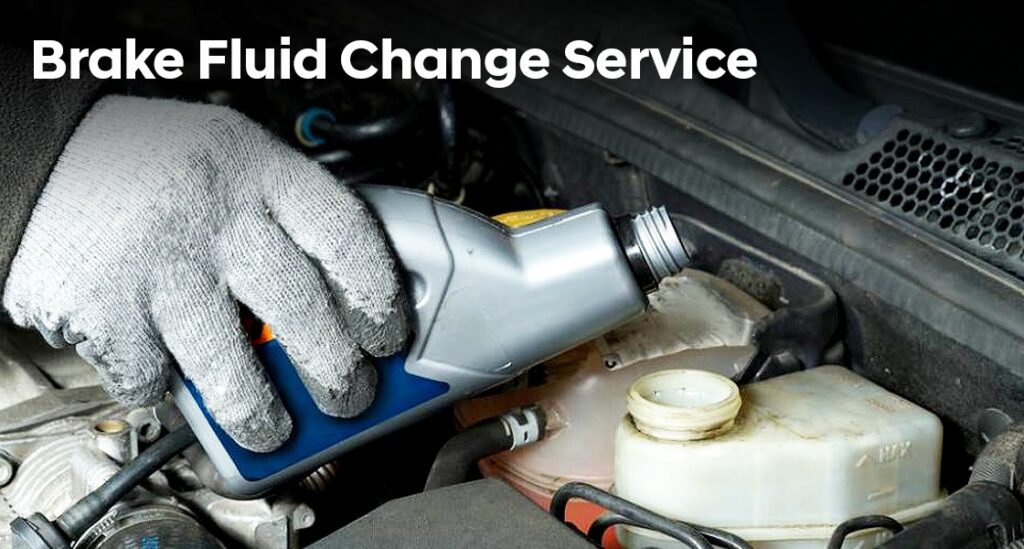
The brake fluid change service is an essential part of your car’s routine maintenance.
Your vehicle’s braking system is one of the most critical safety features that requires brake fluid for smooth functioning. This hydraulic fluid transmits the force you apply to the brake pedal, enabling your car to stop safely and effectively. Over time, brake fluid deteriorates, absorbing moisture and losing its effectiveness. This is why regular brake fluid changes are essential.
Find below everything about brake fluid change service.
Table of Contents
ToggleWhat is the Role of Brake Fluid?
Brake fluid is a non-compressible hydraulic fluid designed to transfer pressure from the master cylinder to the brake calipers or wheel cylinders. This pressure forces the brake pads against the rotors or the brake shoes against the drums, ultimately stopping your vehicle.
Key properties of brake fluid include:
Incompressibility: It must remain incompressible under high pressure to ensure efficient braking.
High Boiling Point: It must have a high boiling point to prevent vapor lock, which occurs when the fluid boils and creates air bubbles, leading to brake failure.
Corrosion Resistance: It must protect the braking system’s metal components from corrosion.
Viscosity Stability: It must maintain its viscosity across a wide range of temperatures.
Why is Brake Fluid Change Service Necessary?
Brake fluid is hygroscopic, meaning it readily absorbs moisture from the atmosphere. Over time, this moisture accumulation leads to several critical issues:
Reduced Boiling Point: Moisture lowers the boiling point of the fluid, increasing the risk of vapor lock, especially during heavy braking or in hot weather.
Corrosion: Moisture promotes corrosion within the braking system, damaging brake lines, calipers, and wheel cylinders.
Reduced Braking Efficiency: Contaminated brake fluid can lead to spongy brake pedal feel and reduced braking performance.
When Should You Schedule a Brake Fluid Change?
The frequency of brake fluid changes varies depending on the vehicle manufacturer’s recommendations and driving conditions. However, here are some general guidelines:
Manufacturer’s Recommendations: Always consult your vehicle’s owner’s manual for the recommended service interval. Typically, it’s every 2-3 years or 30,000-45,000 miles.
Visual Inspection: Regularly inspect the brake fluid reservoir. If the fluid appears dark or cloudy, it’s a sign that it needs to be changed.
Moisture Testing: Use a brake fluid tester to measure the moisture content. If it exceeds 3%, a fluid change is recommended.
Driving Conditions: If you frequently drive in heavy traffic, tow heavy loads, or drive in mountainous areas, you may need to change the fluid more often.
The Brake Fluid Change Process
A professional brake fluid change involves several steps:
Inspection: The technician inspects the braking system for leaks, damage, and wear.
Fluid Extraction: The old brake fluid is extracted from the master cylinder reservoir.
Flushing: New brake fluid is introduced into the system, flushing out the old fluid and any contaminants.
Bleeding: The brake system is bled to remove any air bubbles, ensuring optimal brake pedal feel.
Refilling: The brake fluid reservoir is refilled to the correct level.
Testing: The braking system is tested to ensure proper operation.
What are the Benefits of Timely Brake Fluid Changes?
Improved Braking Performance: Fresh brake fluid ensures consistent and reliable braking, improving vehicle safety.
Extended Component Lifespan: Regular fluid changes prevent corrosion and damage to braking system components, extending their lifespan.
Reduced Risk of Brake Failure: Maintaining a high boiling point reduces the risk of vapor lock and brake failure, especially in critical situations.
Enhanced Safety: A well-maintained braking system ensures optimal safety for you and your passengers.
Brake fluid is a vital component of your vehicle’s braking system, and regular changes are essential for maintaining safety and performance. Prioritize brake fluid change service and enjoy a safe and confident driving experience.
Auto Car Repair in Delhi NCR
The multi-brand car service center is your one-stop destination for all your car needs. They offer routine maintenance, complex repairs, and specialized detailing services. Their workshops are designed to accommodate different services ensuring complete safety and reliability.
Book your car service at Auto Car Repair!
What are the signs of bad brake fluid?
Dark or cloudy fluid, spongy brake pedal, and reduced braking performance.
Will low brake fluid cause brake failure?
Yes, it can lead to reduced braking performance and potential failure.
How long does a brake fluid change take?
The brake fluid change service typically takes 30 minutes to an hour.
Visit Auto Car Repair Locations
Moti Nagar: 60 N G Road, Rama Rd, Moti Nagar, New Delhi, Delhi 110015
Okhla: G7JF+F87, Pocket W, Okhla Phase II, Okhla Industrial Estate, New Delhi, Delhi 110020
Noida: H-142, near Ananda Corporate Office, H Block, Sector 63, Noida, Uttar Pradesh 201301