Wheel alignment is one of the most critical aspects of vehicle maintenance. Many car owners tend to delay wheel alignment service, assuming it’s only required when tyres are replaced or when steering feels completely off.
However, timely wheel alignment plays a major role in maintaining driving comfort, vehicle safety, and long-term cost efficiency.
Find below the top five reasons why you should not delay your car wheel alignment service and how it protects both your vehicle and your wallet.
Table of Contents
Toggle1. Prevents Uneven and Premature Tyre Wear
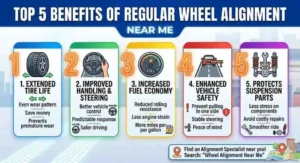
One of the most immediate consequences of poor wheel alignment is uneven tyre wear. When wheels are misaligned, tyres do not make uniform contact with the road surface. This causes certain sections of the tyre to wear out faster than others.
How misalignment affects tyres:
- Inner or outer edges of tyres wear out quickly
- Tread life reduces drastically
- Tyres lose proper grip and stability
- Increased risk of tyre blowouts at high speeds
Uneven wear means replacing tyres much earlier than expected. Regular car wheel alignment ensures tyres wear evenly, helping you get the maximum life out of every set.
2. Improves Steering Control and Driving Safety
Delayed wheel alignment directly affects your steering response and vehicle control. Misaligned wheels can cause the car to pull towards one side, making it difficult to drive in a straight line.
Safety risks of poor alignment:
- Reduced steering precision
- Difficulty maintaining lane discipline
- Increased driver fatigue during long drives
- Poor handling during sudden braking or cornering
In emergencies, even a slight delay in steering response can make a big difference. Proper car wheel alignment ensures predictable handling, better road grip, and safer driving, especially at higher speeds or on highways.
3. Enhances Fuel Efficiency
Many car owners are unaware that wheel alignment directly impacts fuel efficiency. When wheels are not aligned correctly, tyres create extra rolling resistance against the road.
How misalignment increases fuel consumption:
- Engine works harder to move the car forward
- Increased drag reduces mileage
- More fuel is burned to maintain speed
Timely wheel alignment reduces unnecessary resistance, allowing your car to move smoothly and efficiently, saving fuel in the long run.
4. Protects Suspension and Steering Components
Car wheel alignment is closely linked with your car’s suspension and steering system. When wheels are misaligned, it puts uneven stress on suspension parts such as tie rods, ball joints, control arms, and shock absorbers.
Long-term effects of delayed alignment:
- Premature wear of suspension components
- Steering wheel vibration
- Increased repair and replacement costs
- Reduced ride comfort
Ignoring wheel alignment for too long can turn a simple maintenance service into an expensive mechanical repair. Regular alignment checks help protect vital components and maintain overall vehicle health.
5. Ensures a Comfortable and Smooth Driving Experience
Driving comfort is not just about plush seats or advanced features, it also depends on how your car behaves on the road. A misaligned vehicle often feels unstable, vibrates at certain speeds, or requires constant steering correction.
Benefits of proper alignment for comfort:
- Straight and stable driving
- Reduced steering wheel vibration
- Less effort required to control the vehicle
- Smoother ride on highways and city roads
Proper wheel alignment significantly reduces driving fatigue and improves overall ride quality, especially in busy city traffic.
When Should You Get Car Wheel Alignment Done?
You should not wait for visible symptoms alone. Wheel alignment is recommended:
- Every 5,000–10,000 km
- After replacing tyres
- After hitting potholes or road dividers
- If the steering pulls to one side
- If the steering wheel is not centered
Proactive wheel alignment ensures small issues are corrected before they turn into bigger problems.
FAQs: Car Wheel Alignment Service
1. What happens if I delay wheel alignment for too long?
Delaying wheel alignment can lead to uneven tyre wear, poor steering control, reduced fuel efficiency, and damage to suspension components. Over time, it increases maintenance and repair costs.
2. Is wheel alignment necessary if my car feels fine?
Yes. Even if the car feels normal, minor misalignments can still exist and cause gradual tyre and suspension damage. Regular alignment checks help prevent hidden issues.
3. How often should wheel alignment be done in Indian conditions?
In Delhi road conditions, wheel alignment is recommended every 5,000–10,000 km or whenever you notice changes in steering or tyre wear.
4. Can wheel alignment improve mileage?
Yes. Proper wheel alignment reduces rolling resistance, allowing the car to move smoothly and improving fuel efficiency over time.
5. Is wheel alignment different from wheel balancing?
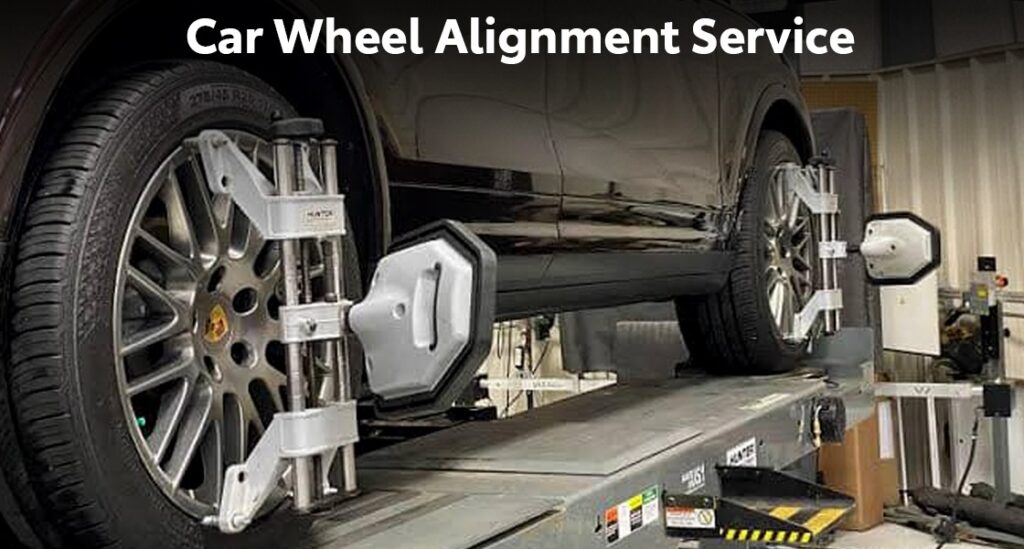
Yes. Wheel alignment adjusts the angles of the wheels for proper direction and stability, while wheel balancing ensures even weight distribution on tyres to avoid vibrations.
Car wheel alignment is a critical factor in ensuring safety, comfort, efficiency, and long-term vehicle reliability. Delaying it may not show immediate consequences, but the hidden damage can be costly over time.
By opting for timely wheel alignment services, you protect your tyres, improve fuel economy, maintain driving safety, and enjoy a smoother driving experience every day.
Regular maintenance today prevents major repairs tomorrow!
Visit Auto Car Repair Locations
Moti Nagar: 60 N G Road, Rama Rd, Moti Nagar, New Delhi, Delhi 110015
Okhla: G7JF+F87, Pocket W, Okhla Phase II, Okhla Industrial Estate, New Delhi, Delhi 110020
Noida: H-142, near Ananda Corporate Office, H Block, Sector 63, Noida, Uttar Pradesh 201301