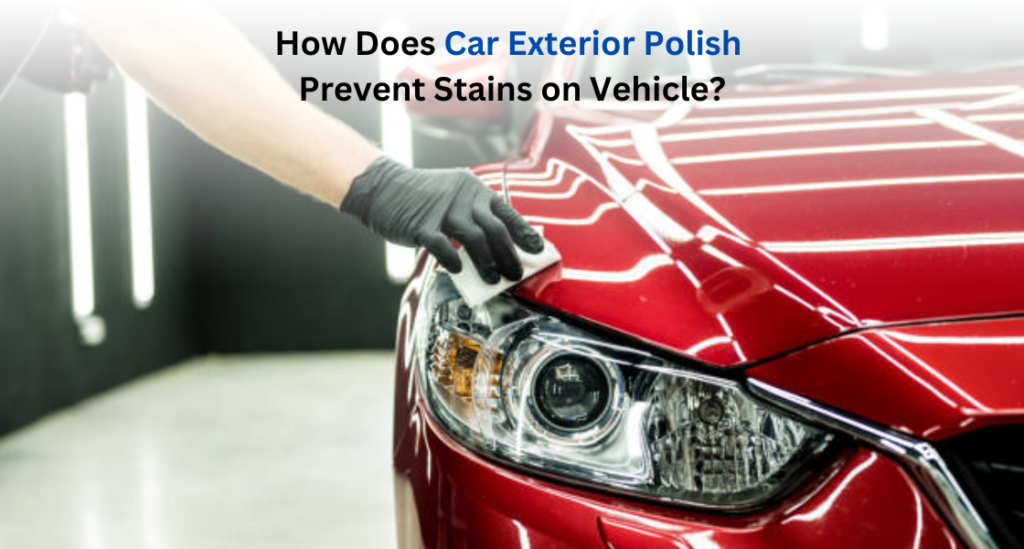
Car exterior polish protects against environmental contaminants, UV damage, and common stains.
Several environmental contaminants damage your car’s exterior resulting in a dull appearance. Car polish acts as a barrier between these contaminants and your vehicle, preventing the shine and durability of the car paint.
Find below more about the importance of car polish.
Table of Contents
ToggleWhat is Car Exterior Polish?
Car Exterior polish contains abrasives, oils, and protective polymers that work together to clean, smooth, and shield your vehicle’s paint. The process begins by removing a microscopically thin layer of clear coat, eliminating minor imperfections, and exposing a fresh surface. As you buff the polish, it leaves behind protective polymers that bond with your paint, creating a hydrophobic barrier.
How Does Car Polish Creates a Protective Shield?
When properly applied, car polish fills microscopic pores and imperfections in your paint’s surface. This creates a smooth, sealed surface that prevents contaminants from bonding directly with your car’s clear coat. The water beads and rolls off rather than soaking in, and dirt sits on top rather than embedding itself.
Preventing Common Stains and Marks
The car exterior polish prevents your car’s paint from the following:
Bird Droppings
Bird droppings contain acidic compounds that can etch into your car’s paint if left unattended. Polished surfaces make it harder for these droppings to adhere and easier to remove before damage occurs. The protective barrier slows down the chemical reaction between the acidic waste and your paint, buying you time to safely remove it.
Tree Sap
The sticky nature of tree sap makes it particularly troublesome for car owners. Unpolished surfaces provide microscopic anchor points where sap can bond tightly. A polished surface minimizes these contact points, making sap removal significantly easier before it can harden and cause permanent staining.
Industrial Fallout
Industrial areas expose your vehicle to airborne metal particles, factory emissions, and other industrial fallout. These particles can settle on your paint and begin oxidizing (rusting), causing tiny spots of discoloration. Polish creates a barrier that prevents these particles from damaging your car’s clear coat.
Road Salt and Chemicals
Winter driving exposes your vehicle to salt and de-icing chemicals that accelerate corrosion. A good polish creates a hydrophobic layer that repels these solutions, preventing them from lingering on your paint where they can cause damage.
Water Spots
Hard water contains minerals that remain behind after water evaporates, leaving unsightly spots. On a polished surface, water beads up rather than spreading out, reducing the surface area for mineral deposits and making them easier to remove before they dry.
UV Protection
One of the most significant benefits of car polish is protection against ultraviolet radiation. UV rays break down paint molecules over time, causing oxidation that presents as fading and chalking. Many modern car polishes contain UV inhibitors that absorb or reflect these harmful rays, preventing them from reaching your paint.
How Does Car Polish Differ from Wax?
Car polish and wax service different purposes, as explained below:
Polish: It contains mild abrasives that remove a thin layer of clear coat to eliminate minor imperfections while depositing protective polymers.
Wax: It contains carnauba or synthetic waxes that add a protective layer on top of your existing clear coat without removing material.
For maximum protection, professionals recommend polishing first to correct imperfections, then applying wax for additional protection.
Vehicles that receive regular car polishing maintain their value better than neglected ones. The protective barrier slows oxidation, prevents staining, and reduces the likelihood of needing more aggressive correction techniques like wet sanding or repainting. This preservation of original paint contributes significantly to resale value.
The Car Exterior Polish Application Process
Proper application is key to maximizing the benefits of polish. A meticulous approach minimizes the risk of damage and ensures a flawless finish:
- Preparation: Thoroughly wash and dry the car to remove loose dirt, debris, and contaminants.
- Application: Apply a small amount of polish to a microfiber applicator pad.
- Polishing: Work in small sections, applying even pressure and moving in a circular motion.
- Drying: Allow the polish to dry completely before applying any wax or sealant.
- Waxing (Optional): Apply wax for additional protection and shine.
Car exterior polish creates a crucial barrier between your vehicle and environmental threats. Its ability to fill imperfections, create a hydrophobic surface, and provide UV protection makes it an essential element of preventative maintenance. It is recommended to avail of car polish service every 3-6 months depending on the climate and exposure.
Whether you’re preserving a new car’s showroom shine or restoring an older vehicle’s luster, quality polish provides protection that goes far beyond aesthetics.
Expert Car Service at Auto Car Repair
The multibrand car service center offers a wide range of car repair and maintenance services. Their expert technicians have the knowledge and expertise to diagnose and repair different car issues. The fully equipped workshops serve as a one-stop shop for all automotive needs.
Book your car service at Auto Car Repair.
What is car polish?
Car polish is a product used to refine the paint finish after using rubbing compound (if needed), remove light scratches and swirl marks, and enhance the gloss and shine of a car’s paint.
What is the difference between car polish and rubbing compound?
Rubbing compound is more abrasive and used to remove deeper imperfections. Polish is less abrasive and used to refine the finish and add shine. You typically use rubbing compound before polish.
Can car polish remove water spots?
Car polish can often remove light water spots. Severe water spots might require a more aggressive approach, like using a water spot remover or even light compounding.
Visit Auto Car Repair Locations
Moti Nagar: 60 N G Road, Rama Rd, Moti Nagar, New Delhi, Delhi 110015
Okhla: G7JF+F87, Pocket W, Okhla Phase II, Okhla Industrial Estate, New Delhi, Delhi 110020
Noida: H-142, near Ananda Corporate Office, H Block, Sector 63, Noida, Uttar Pradesh 201301