Your car’s wheels play a crucial role in safety, comfort, and performance. However, everyday driving conditions such as potholes, speed breakers, rough roads, and sudden braking can gradually disturb your vehicle’s alignment and wheel balance. Ignoring these issues can lead to uneven tyre wear, poor mileage, steering problems, and even safety risks.
Find below the top 6 signs your car needs wheel alignment and balancing.
1. Car Pulling to One Side While Driving
When your car drifts or pulls to the left or right, even when you are holding the steering wheel straight, it is a major sign of misalignment.
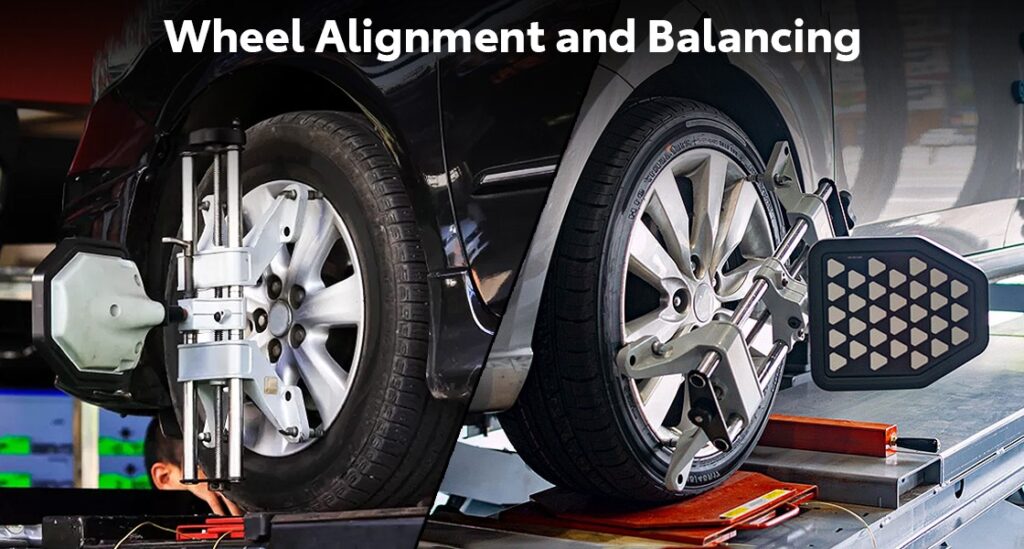
Wheel alignment refers to adjusting the angles of the wheels according to the manufacturer’s specifications. When alignment is off:
- Wheels are not pointing in the same direction
- The vehicle loses straight-line stability
- Steering correction becomes necessary
If you constantly have to correct the steering to keep the car straight, it increases driver fatigue and reduces safety, especially on highways. Hence, if your car keeps pulling even on a flat road, you must get your car checked for alignment.
2. Uneven or Rapid Tyre Wear
Uneven tyre wear is a strong indicator of wheel alignment and balancing issues.
Common Patterns of Uneven Wear:
- Inner or outer edge wear
- Feathering (rough edge on tyre tread)
- Patchy tread wear
Improper alignment causes certain parts of the tyre to make more contact with the road surface. This leads to faster deterioration in specific sections.
Wheel balancing issues can also cause irregular tyre wear due to uneven weight distribution. Driving with uneven tyres reduces grip and braking efficiency, increasing accident risk.
3. Steering Wheel Vibration
If you feel vibrations in the steering wheel while driving, especially at higher speeds, your wheels may be unbalanced.
Wheel balancing ensures equal weight distribution around the tyre and wheel assembly. When wheels are not balanced:
- Tyres rotate unevenly
- Vibrations increase at certain speeds
- Steering stability reduces
When You Notice It Most:
- Between 60–100 km/h
- On smooth highways
- During acceleration
Ignoring steering vibrations can damage suspension components over time.
4. Crooked or Off-Center Steering Wheel
Another clear sign of misalignment is when your car’s steering wheel is not centered while driving straight.
For example:
- The steering wheel tilts left or right
- You have to keep it slightly turned to drive straight
This usually means the front wheels are not aligned properly.
An off-center steering wheel reduces precise control and can impact overall driving comfort. Even if the car seems to drive normally, a crooked steering wheel should not be ignored.
5. Noisy or Unusual Tyre Sounds
Wheel imbalance or poor alignment can cause unusual noises from the tyres.
You may hear:
- Humming sounds
- Thumping noise
- Uneven road noise
Uneven tyre contact with the road creates inconsistent friction. Over time, this produces noise and further tyre damage. If tyre noise increases without visible tyre damage, alignment and balancing should be inspected.
6. Poor Fuel Efficiency
Many drivers do not realize that wheel misalignment can directly impact fuel consumption.
How It Affects Mileage:
When wheels are not aligned properly:
- The engine works harder
- Rolling resistance increases
- Fuel efficiency decreases
Even a slight misalignment can cause noticeable mileage reduction over time. If your fuel costs suddenly increase without obvious reason, get your vehicle checked for wheel alignment and balancing.
Difference Between Wheel Alignment and Wheel Balancing
Wheel Alignment:
- Adjusts the angle of the wheels
- Ensures proper road contact
- Improves steering and stability
Wheel Balancing:
- Equalizes weight around the tyre
- Prevents vibration
- Enhances smooth driving
Both services work together to maintain vehicle stability and tyre life.
What Causes Wheel Misalignment and Imbalance?
Several factors contribute to these wheel issues:
- Hitting potholes
- Climbing curbs
- Rough road conditions
- Sudden braking
- Accidents
- Suspension wear
Delhi road conditions, especially in cities with frequent construction and uneven surfaces, make periodic checks essential.
How Often Should You Get It Checked?
Experts generally recommend:
- Wheel alignment every 5,000–10,000 km
- Wheel balancing during tyre rotation
- Inspection after hitting a major pothole
- Check during regular servicing
Routine checks prevent long-term damage and reduce maintenance costs.
Benefits of Timely Wheel Alignment and Balancing
Regular servicing and maintenance help:
- Longer tyre life
- Better fuel efficiency
- Smooth and vibration-free driving
- Improved steering control
- Reduced suspension wear
- Enhanced road safety
Timely maintenance today can prevent costly repairs tomorrow.
Risks of Ignoring the Warning Signs
If you delay wheel alignment and balancing services, you may face:
- Premature tyre replacement
- Suspension damage
- Reduced braking performance
- Increased accident risk
- Higher fuel expenses
Regular inspection ensures your vehicle performs at its best.
Wheel alignment and balancing are often overlooked until visible damage occurs. However, early detection of warning signs such as steering vibration, uneven tyre wear, or pulling to one side can save you significant money and enhance driving safety.
By paying attention to these six signs and scheduling regular maintenance, you ensure a smoother, safer, and more efficient driving experience.
Get the best car wheel alignment and balancing price at Auto Car Repair.
FAQs
1. How do I know if my car needs wheel alignment?
If your car pulls to one side, the steering wheel is off-center, or tyres wear unevenly, it likely needs wheel alignment.
2. What causes steering wheel vibration?
Steering vibration is usually caused by unbalanced wheels or uneven tyre weight distribution.
3. How often should wheel balancing be done?
Wheel balancing should be checked during tyre rotation or every 5,000–10,000 km, depending on driving conditions.
4. Can wheel misalignment affect fuel efficiency?
Yes, misaligned wheels increase rolling resistance, which reduces mileage.
5. Is wheel alignment necessary after hitting a pothole?
Yes, severe pothole impact can disturb alignment and balancing, so inspection is recommended.
Auto Car Repair – Multi-Brand Car Service Center
Looking for the best car repair and maintenance in Delhi NCR?
Auto Car Repair is your one-stop shop for all automotive needs. The expert technicians there use the latest technology, top products, and OEM parts to deliver exceptional service.
Book your car service today!