Every turn, lane change, and highway stretch depends on how well your wheels connect with the road. Properly aligned and balanced wheels help your car steer smoothly, stay stable, and deliver a more comfortable drive. When alignment or balancing goes off, you may notice steering pull, vibrations, uneven tyre wear, and changes in handling.
Regular car wheel alignment and balancing helps your vehicle maintain proper road contact, smoother wheel rotation, and predictable handling. This becomes especially important on roads with potholes, uneven surfaces, speed breakers, and frequent construction patches.
But how exactly do these services improve your driving experience? Find out below.
What Is Car Wheel Alignment and Balancing?
Wheel Alignment
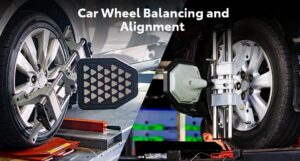
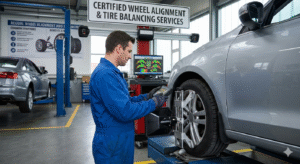
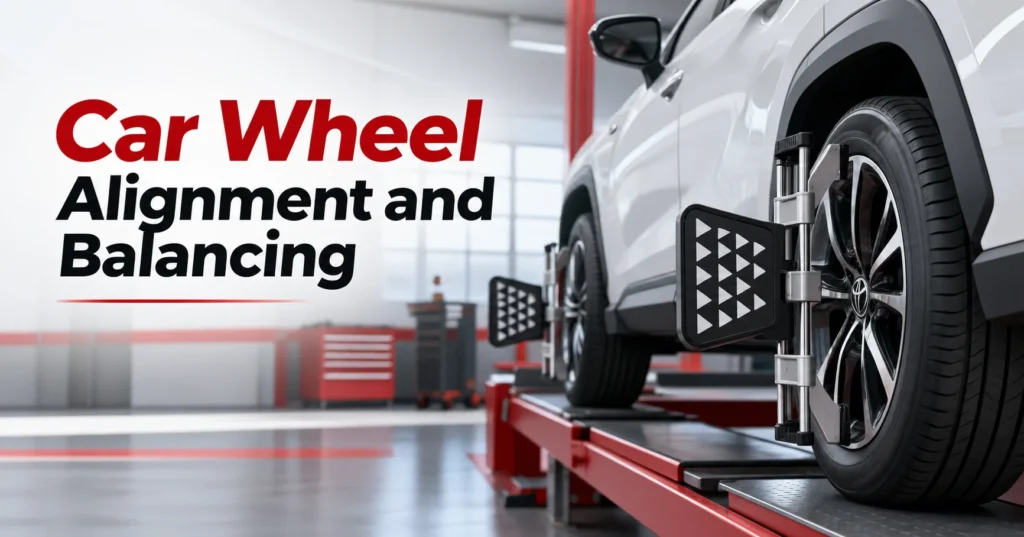
Wheel alignment involves checking and adjusting the angles of the wheels according to the vehicle manufacturer’s specifications. Technicians typically assess alignment parameters such as camber, caster, and toe, depending on the vehicle and available adjustments.
Correct alignment helps the wheels maintain the intended position relative to the road and one another.
Poor alignment can cause symptoms such as:
- Vehicle pulling to one side
- Uneven or rapid tyre wear
- Off-centre steering wheel
- Reduced straight-line stability
- Steering that feels different from normal
Wheel Balancing
Wheel balancing focuses on how evenly the weight is distributed around each wheel-and-tyre assembly.
Even small weight differences can create vibrations when the wheel rotates, particularly as vehicle speed increases. During balancing, technicians use specialised equipment to identify these imbalances and add small balancing weights where required.
Common signs of wheel imbalance include steering-wheel vibration, seat or floor vibration at certain speeds, and uneven tyre wear.
Together, car wheel alignment and balancing help the tyres rotate smoothly and maintain the correct position on the road.
Benefits of Car Wheel Alignment and Balancing
1. Improves Steering Control
One of the most noticeable benefits of correct wheel alignment is better steering behaviour.
When the wheels fall out of alignment, the car may start pulling towards one side. The driver then has to make frequent steering corrections just to keep the vehicle travelling straight.
Proper alignment helps the wheels follow the intended direction, allowing the vehicle to respond more predictably to steering inputs.
This becomes particularly useful during everyday city driving, where drivers constantly move between lanes, negotiate turns, navigate crowded roads, and respond to changing traffic conditions.
If your steering wheel sits off-centre when the vehicle travels straight or you constantly correct the steering direction, consider getting the alignment inspected.
2. Reduces Unwanted Vibrations
Does your steering wheel begin to vibrate when you reach a particular speed?
Wheel imbalance could be one of the reasons.
A tyre-and-wheel assembly with uneven weight distribution may rotate smoothly at lower speeds but create noticeable vibrations as speed increases.
Professional wheel balancing identifies the imbalance and allows technicians to correct it using appropriate balancing weights.
Reducing these vibrations can make the vehicle feel noticeably smoother, particularly on highways and expressways where you maintain higher speeds for longer periods.
However, steering vibration can also result from tyre damage, bent wheels, worn suspension parts, or other mechanical issues. A professional inspection can identify the actual cause rather than assuming balancing alone will solve the problem.
3. Promotes Even Tyre Wear
Your tyres continuously interact with the road, so their position has a direct effect on how the tread wears.
Incorrect wheel alignment can place uneven pressure on different areas of a tyre. Over time, one edge may wear considerably faster than the rest of the tread.
This creates two problems.
First, you may need to replace tyres earlier even when significant tread remains on other areas. Second, irregular tyre wear can affect road contact and vehicle behaviour.
Correct alignment helps distribute tyre contact more appropriately according to the vehicle’s intended suspension geometry.
Regularly inspecting tyre tread can also help you identify potential alignment problems early. If you notice excessive wear along the inner or outer edges, do not simply replace the tyre. Ask a professional to inspect the alignment and other relevant suspension components as well.
4. Enhances Driving Stability
Vehicle stability matters whether you are driving through crowded city roads or travelling on an open highway.
Incorrect alignment can make the car feel less settled, particularly when travelling in a straight line. You may notice the vehicle wandering or requiring more frequent steering corrections.
Proper car wheel alignment helps the wheels work in their intended direction, supporting more predictable handling and straight-line stability.
Wheel balancing complements this by helping each wheel rotate smoothly without excessive vibration caused by uneven mass distribution.
Together, car wheel alignment and balancing can help the car feel more composed and predictable behind the wheel.
5. Makes Long Drives More Comfortable
Small steering corrections and continuous vibrations may not seem serious during a short journey, but they can become tiring during longer drives.
Imagine travelling on an expressway while the steering wheel continuously vibrates or the vehicle repeatedly drifts towards one side. The driver needs to remain physically engaged in correcting something that the car should naturally handle more smoothly.
Correct wheel alignment reduces unnecessary steering correction when misalignment causes the problem, while proper balancing can reduce speed-related vibration caused by wheel imbalance.
As a result, the vehicle can feel smoother and easier to drive over longer distances.
This makes car wheel alignment and balancing particularly useful before road trips, especially when you have already noticed unusual steering or vibration.
6. Helps Protect Tyres from Premature Wear
Tyres represent a significant maintenance expense, so getting the maximum safe service life from them matters.
Misalignment can cause certain sections of a tyre to work harder than others. The resulting uneven wear may shorten the tyre’s usable life.
Wheel imbalance can also contribute to irregular wear patterns and place unnecessary stress on the tyre-and-wheel assembly.
Maintaining correct alignment and balance cannot prevent normal tyre wear, but it can help avoid premature wear caused specifically by incorrect wheel angles or imbalance.
Drivers should combine these services with regular tyre-pressure checks, tyre rotation where recommended, tread inspection, and timely replacement.
7. Supports a Safer and More Predictable Drive
Correct car wheel alignment and balancing contribute to the overall condition and behaviour of your vehicle.
A car that tracks properly, responds predictably to steering, and does not suffer from unnecessary wheel vibration gives the driver better control under normal driving conditions.
Proper tyre contact and even wear also matter because tyres play a critical role in steering, braking, and maintaining traction.
However, car wheel alignment and balancing form only one part of vehicle safety. Tyre condition, tyre pressure, brakes, suspension, steering components, and other mechanical systems also require regular inspection.
Why Do Cars Lose Wheel Alignment?
Wheel alignment can change gradually through regular driving or suddenly after a strong impact.
Common causes include:
- Hitting potholes
- Driving over broken or uneven roads
- Striking a kerb
- Passing over speed breakers aggressively
- Suspension component wear
- Steering component wear
- Accidental impacts
- Suspension repairs or component replacement
Delhi and NCR roads can expose vehicles to several of these conditions. Even when a pothole impact does not visibly damage the tyre or wheel, it may affect alignment or other suspension components.
This makes it important to pay attention to changes in steering behaviour after a significant impact.
What Causes Wheel Imbalance?
A wheel-and-tyre assembly can lose its proper balance for several reasons.
Normal tyre wear can gradually change weight distribution. Balancing weights may also become loose or fall off. Tyre replacement, puncture repair, or wheel removal can make balancing necessary in some situations.
What Are the Signs Your Car Needs Wheel Alignment and Balancing?
Your car often gives noticeable warning signs when something is wrong.
Consider booking an inspection if you notice:
- Car pulling towards one side
- Steering wheel sitting off-centre
- Uneven tyre wear
- Steering-wheel vibration
- Seat or floor vibration at certain speeds
- Vehicle wandering on straight roads
- Unusual handling after hitting a pothole
- New tyres developing irregular wear
Early diagnosis can prevent a relatively small issue from contributing to unnecessary tyre wear or affecting other components.
When Should You Get Car Wheel Alignment and Balancing Checked?
The right interval for wheel alignment and balancing depends on your vehicle, tyre condition, driving habits, and road conditions.
You must get your wheels checked whenever you notice unusual symptoms or encounter conditions that could affect their alignment or balance.
An inspection can make sense:
- After hitting a severe pothole or kerb
- When installing new tyres
- When you notice uneven tyre wear
- When the vehicle consistently pulls to one side
- When the steering wheel remains off-centre
- When you experience unexplained speed-related vibration
- After certain suspension or steering repairs
- Before a long road trip if you have noticed handling concerns
You can also ask technicians to inspect tyre condition during routine servicing.
Car wheel alignment and balancing can significantly improve the way your vehicle feels on the road. Correct alignment supports predictable steering, straight-line stability, and even tyre wear, while proper wheel balancing helps reduce vibration and promotes smoother wheel rotation.
Regular inspections become especially valuable when your car frequently encounters potholes, uneven roads, speed breakers, and demanding urban driving conditions.
If you notice steering pull, vibration, an off-centre steering wheel, or unusual tyre wear, do not ignore the symptoms. A timely inspection can identify whether your vehicle needs alignment, balancing, tyre attention, or another steering or suspension repair.
Visit Auto Car Repair for professional wheel alignment and balancing service in Delhi NCR.
FAQs
1. What is the difference between wheel alignment and wheel balancing?
Wheel alignment focuses on correcting wheel angles according to vehicle specifications, while wheel balancing corrects uneven weight distribution within the wheel-and-tyre assembly. Alignment primarily affects tyre wear, steering, and vehicle tracking, whereas imbalance commonly causes vibrations that become more noticeable at certain speeds.
2. How do I know if my car needs wheel alignment?
Common signs include the vehicle consistently pulling to one side, an off-centre steering wheel, uneven tyre wear, or unusual straight-line handling. A strong pothole or kerb impact can also affect alignment. Since suspension and tyre problems can cause similar symptoms, a professional inspection can confirm the actual issue.
3. Why does my steering wheel vibrate at high speeds?
Wheel imbalance is one possible cause of steering-wheel vibration at higher speeds, but it is not the only one. Damaged tyres, bent wheels, worn suspension components, or other mechanical problems can also cause vibration. Have the vehicle inspected professionally to identify the source before carrying out repairs.
4. Does wheel alignment help tyres last longer?
Correct wheel alignment can help prevent premature tyre wear caused by incorrect wheel angles. When the wheels remain properly aligned, the tyre tread can maintain more appropriate contact with the road. Regular tyre-pressure checks, rotation, balancing, and suspension maintenance also contribute to maximising safe tyre life.
5. Should I get wheel alignment and balancing after changing tyres?
Checking wheel balancing when installing new tyres helps ensure the new wheel-and-tyre assemblies rotate smoothly. An alignment inspection may also be worthwhile, particularly if the previous tyres showed uneven wear or the vehicle had steering issues. The technician can determine which services your vehicle actually requires.
Looking for dependable car care in Delhi NCR?
Visit Auto Car Repair for professional servicing, diagnostics, repairs, and maintenance. Our experienced technicians carefully inspect your vehicle and recommend the right service based on its condition.
Book your car service appointment with ACR today.
| Showroom Location | Address | Call/Whatsapp Number | Nearby Locations |
| Moti Nagar | 57, Rama Rd, Block C, Najafgarh Road Industrial Area, New Delhi, Delhi, 110015 | 098704 00861 | Ramesh Nagar, Punjabi Bagh, Rajouri Garden, Mayapuri, Kirti Nagar, Janakpuri, Sudarshan Park, Chand Nagar, ESI, |
| Gurugram | Unit-1 Plot No 29 & 30, near, Kargil Shaheed Sukhbir Singh Yadav Marg, Info Technology Park, Sector 34, Gurugram, Haryana 122004 | 098104 46692 | Sec 37 Gurugram, Sec 37B Gurugram, Sec 72A Gurugram, Sec 74 Gurugram, Sec 35 Gurugram, Sec 36 Gurugram, |
| Noida | H-142, near Ananda Corporate Office, H Block, Sector 63, Noida, Uttar Pradesh 201309 | 097739 94175 | Noida 63, Noida 62, Noida 65, Noida 66, Gaur City 2, Indirapuram, |
| Okhla | ACR Automobiles Plot No. 1 – 8, DSIDC Sheds, Okhla Phase 2, New Delhi, 110020 | 092892 00643 | Okhla Phase 2, Sarita Vihar, Jasola Vihar, Govindpuri, Okhla Nsic, Nehru Palace, |