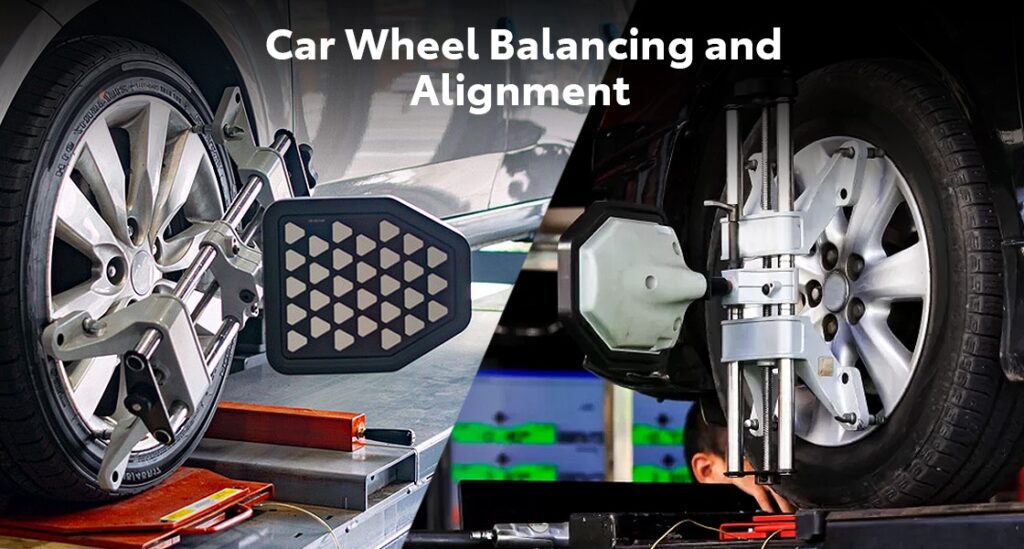
Have you noticed that one side of your tyre is wearing faster than the other, even though the tyres are relatively new?
Poor Wheel Balancing and Alignment could be one of the reasons. Incorrect wheel alignment changes how the tyres contact the road, while unbalanced wheels can create vibrations and uneven stress as they rotate.
Maintaining proper wheel balance and alignment becomes particularly important in Delhi NCR. Potholes, uneven roads, damaged road surfaces and frequent encounters with speed breakers can affect wheel alignment and contribute to tyre and suspension problems over time.
Uneven tyre wear can affect steering response, ride comfort and vehicle stability. Recognising the warning signs early and getting the wheels inspected can help prevent unnecessary tyre replacement and maintain a smoother driving experience.
How Does Poor Wheel Alignment Cause Uneven Tyre Wear?
Wheel alignment determines the angles at which your car’s wheels sit relative to the road and each other. When the wheel angles move outside the manufacturer’s recommended specifications, the tyres contact the road unevenly.
For example, an incorrectly aligned wheel may place greater pressure on the inner or outer edge of the tyre. As you continue driving, that section experiences greater friction and starts wearing faster than the rest of the tread.
The problem can gradually become more noticeable. What begins as minor edge wear can eventually reduce usable tread depth and shorten the overall life of the tyre.
Regular Wheel Balancing and Alignment checks can address these problems before uneven wear becomes severe.
Can Poor Wheel Balancing Also Damage Your Car Tyres?
Yes.
Wheel balancing and wheel alignment address different problems, but both can affect tyre performance.
A wheel becomes unbalanced when its weight is not distributed evenly around the tyre and wheel assembly. As the wheel rotates, this uneven weight distribution can create vibrations, particularly at certain speeds.
These vibrations repeatedly place additional stress on the tyre and other components. Over time, an unbalanced wheel may contribute to irregular or patchy tyre wear.
Technicians correct wheel imbalance by identifying the uneven weight distribution and adding small balancing weights at appropriate points on the wheel.
If you notice vibrations that become stronger as your speed increases, consider getting the wheel balance checked rather than assuming the problem will disappear on its own.
What Is the Difference Between Wheel Balancing and Wheel Alignment?
Workshops often perform wheel balancing and alignment together, but each service addresses a different problem.
Wheel balancing focuses on the distribution of weight around each tyre and wheel assembly. Correct balancing helps the wheels rotate smoothly without excessive vibration.
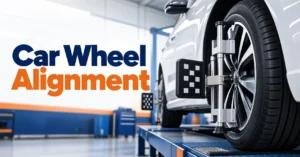
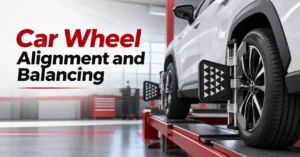
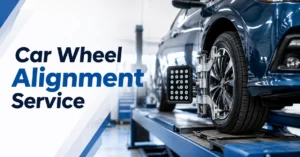
Wheel alignment, on the other hand, focuses on the position and angles of the wheels. Technicians adjust the wheel angles according to the vehicle manufacturer’s specifications so that the tyres maintain appropriate contact with the road.
A vehicle can therefore have correctly balanced wheels but incorrect alignment, or correctly aligned wheels with an imbalance.
Checking both helps maintain smoother driving, predictable handling and more consistent tyre wear.
What Types of Uneven Tyre Wear Can Poor Alignment Cause?
Your car tyres can often provide visible clues about alignment problems.
If the inner or outer edge of a tyre wears considerably faster than the centre, incorrect wheel alignment may be contributing to the problem. Misalignment can cause the tyre to sit at an incorrect angle and concentrate road contact on one part of the tread.
You may also notice unusual tread patterns where sections feel uneven when you run your hand carefully across the tyre surface.
However, wheel alignment is not the only cause of irregular tyre wear. Incorrect tyre pressure, worn suspension components, wheel imbalance and damaged tyres can produce similar symptoms.
A professional inspection can identify the actual cause instead of relying only on the appearance of the tyre.
What Are the Signs Your Car Needs Wheel Balancing and Alignment?
Uneven tyre wear is only one warning sign. Your vehicle may show several changes when its wheels require attention.
Common signs include:
- The vehicle pulls or drifts to one side on a straight road.
- The steering wheel appears off-centre while driving straight.
- You feel unusual vibration through the steering wheel, seat or floor.
- The inner or outer edges of the tyres wear faster.
- The tyres develop irregular or patchy tread wear.
- Steering response feels different from normal.
- The vehicle feels less stable at higher speeds.
Do not wait for severe tyre wear before arranging an inspection. Early diagnosis can help identify whether wheel alignment, balancing, tyre pressure or another component is causing the problem.
Can Potholes Affect Wheel Balancing and Alignment?
Yes. A hard pothole impact can affect your vehicle’s wheel alignment and may also damage tyres, wheels or suspension components.
When a wheel hits a deep pothole, the sudden impact places considerable force on the tyre and suspension. This force can alter alignment angles, particularly after a severe impact.
Delhi NCR drivers may encounter potholes and damaged road surfaces regularly, especially during and after the monsoon season. Repeated impacts can gradually affect alignment even when there is no obvious damage immediately after hitting a pothole.
If your steering behaviour changes, the vehicle starts pulling to one side or you notice new vibrations after a strong pothole impact, get the vehicle inspected.
Searching for Wheel Balancing and Alignment Near Me soon after noticing these symptoms can help you address the problem before it causes additional tyre wear.
Can Speed Breakers Affect Your Car’s Wheel Alignment?
Driving over a speed breaker at an appropriate speed generally allows the suspension to absorb the change in road height safely. However, repeatedly crossing large or poorly designed speed breakers too quickly can place additional stress on tyres, wheels and suspension components.
The impact becomes greater when you approach the speed breaker at excessive speed or one wheel crosses it differently from the other.
Over time, repeated harsh impacts may contribute to alignment problems or expose existing suspension wear.
Reducing speed before crossing speed breakers can help protect the tyres, suspension and wheel alignment from unnecessary stress.
Does Uneven Tyre Wear Affect Driving Safety?
Uneven tyre wear can affect more than the cost of replacing your tyres.
Tyres depend on adequate and consistent tread to maintain appropriate contact with the road. When one section wears excessively, the tyre may not perform as intended during braking, cornering or wet-road driving.
Uneven wear can also affect vehicle stability and steering behaviour.
The risk becomes more important during Delhi’s monsoon season, when tyres need sufficient tread to manage water on the road.
Regular tyre inspections combined with proper Wheel Balancing and Alignment can help maintain consistent tyre contact and predictable vehicle behaviour.
Can Correct Wheel Balancing and Alignment Extend Tyre Life?
Proper wheel alignment helps the tyres contact the road more evenly. This allows the tread to wear more consistently rather than placing excessive pressure on one edge.
Correct wheel balancing also helps the tyre and wheel assembly rotate smoothly, reducing unnecessary vibrations and irregular stress.
Together, these services can help you get better use from your tyres.
However, alignment and balancing should form part of broader tyre maintenance. Maintaining the recommended tyre pressure, rotating tyres when appropriate and checking suspension components also contribute to even tread wear.
Addressing these factors together can help prevent premature tyre replacement.
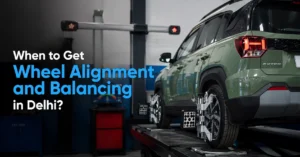
When Should You Get Wheel Balancing and Alignment Checked?
There is no need to wait until the tyres show severe wear.
Consider getting your Wheel Balancing and Alignment inspected when you notice pulling, steering vibration, an off-centre steering wheel or unusual tyre wear. A check is also sensible after a strong pothole impact or when road damage causes a noticeable change in the vehicle’s handling.
You should also consider an inspection after replacing tyres, wheels or certain suspension and steering components.
Regular checks become particularly relevant if you frequently drive on uneven or damaged roads.
Following the vehicle manufacturer’s maintenance recommendations and responding quickly to changes in steering or tyre wear can help prevent small issues from becoming expensive problems.
Why Should Delhi Drivers Pay More Attention to Wheel Alignment?
Delhi NCR driving conditions can put tyres and suspension components under regular stress.
Potholes, uneven road repairs, construction zones, speed breakers and damaged road surfaces can all create repeated impacts. Daily city driving may expose a vehicle to these conditions several times during a single commute.
As a result, drivers should pay attention to subtle changes in steering and tyre condition.
Checking the tyres regularly can help you identify unusual wear early. Look at the tread across the full width of each tyre rather than checking only the outer surface that is easiest to see.
How Can You Prevent Uneven Tyre Wear?
Good tyre maintenance involves more than correcting alignment after a problem appears.
Maintain tyre pressure according to the vehicle manufacturer’s recommendations. Both underinflation and overinflation can cause abnormal tread wear and affect handling.
Check your tyres regularly for uneven tread, cuts, bulges or other visible damage. Avoid hitting potholes whenever it is safe to do so and slow down before crossing speed breakers.
Follow recommended tyre rotation intervals where applicable, as rotation can help distribute wear more evenly across the tyres.
Most importantly, do not ignore changes in steering behaviour or vibration. Early inspection can help identify alignment, balancing or suspension issues before they significantly reduce tyre life.
Can Wheel Balancing and Alignment Save You Money?
Correct Wheel Balancing and Alignment can help reduce avoidable vehicle expenses over time.
When poor alignment causes one edge of a tyre to wear rapidly, you may need to replace the tyre even though other sections still have usable tread. Correcting the alignment early can help prevent this premature wear.
Balanced wheels also reduce unnecessary vibration and stress on tyres and related components.
While wheel balancing and alignment require routine maintenance, addressing problems promptly can prove more economical than repeatedly replacing tyres damaged by an unresolved issue.
Can Poor Wheel Balancing and Alignment Cause Uneven Tyre Wear?
Yes. Poor Wheel Balancing and Alignment can contribute significantly to uneven and premature tyre wear.
Incorrect alignment can force particular sections of the tyre to carry more load and experience greater friction, while wheel imbalance can create vibrations and irregular stress as the tyre rotates.
Ignoring these problems can shorten tyre life and affect ride comfort, steering response and vehicle stability.
Delhi NCR’s potholes, uneven roads and frequent speed breakers make regular tyre and wheel checks particularly valuable. If you notice unusual tyre wear, steering changes or vibrations, arrange a professional inspection instead of waiting for the symptoms to become more severe.
Looking for the best car wheel balancing and alignment near me? Visit Auto Car Repair for expert car services and repairs!
FAQs
1. How do I know if my car needs wheel balancing or alignment?
Your car may need Wheel Balancing and Alignment if it pulls to one side, develops steering-wheel vibrations, shows an off-centre steering wheel or develops uneven tyre wear. Since other tyre and suspension problems can cause similar symptoms, a professional inspection can identify the exact issue.
2. Can wheel alignment fix uneven tyre wear?
Correct wheel alignment can help prevent further abnormal wear caused by incorrect wheel angles, but it cannot restore tread that has already worn away. Addressing alignment problems early can help protect the remaining tyre life and encourage more consistent wear going forward.
3. Do new tyres need wheel balancing and alignment?
Technicians generally balance new tyres when fitting them to the wheels. An alignment check may also be advisable, particularly if the previous tyres showed uneven wear or the vehicle pulls to one side. Correct alignment helps protect your investment in the new tyres.
4. Can potholes cause wheel alignment problems?
Yes. Hitting a deep pothole can place sudden force on the tyre, wheel and suspension and may affect wheel alignment. If you notice pulling, vibration, an off-centre steering wheel or unusual tyre wear after a pothole impact, arrange an inspection.
5. How can I reduce uneven tyre wear?
Maintain the recommended tyre pressure, inspect tread regularly, rotate tyres where applicable and avoid hitting potholes or speed breakers at excessive speeds. Regular Wheel Balancing and Alignment checks can also help identify problems before they cause severe or premature tyre wear.
Get Your Wheel Balancing and Alignment Checked at Auto Car Repair
Do not let incorrect wheel alignment or imbalance shorten the life of your tyres. Visit Auto Car Repair for professional Wheel Balancing and Alignment in Delhi NCR. Our technicians inspect your vehicle, identify the cause of uneven tyre wear, vibration or steering problems and perform the required service to improve tyre performance and driving stability.
| Showroom Location | Address | Call/Whatsapp Number | Nearby Locations |
| Moti Nagar | 57, Rama Rd, Block C, Najafgarh Road Industrial Area, New Delhi, Delhi, 110015 | 098704 00861 | Ramesh Nagar, Punjabi Bagh, Rajouri Garden, Mayapuri, Kirti Nagar, Janakpuri, Sudarshan Park, Chand Nagar, ESI, |
| Gurugram | Unit-1 Plot No 29 & 30, near, Kargil Shaheed Sukhbir Singh Yadav Marg, Info Technology Park, Sector 34, Gurugram, Haryana 122004 | 098104 46692 | Sec 37 Gurugram, Sec 37B Gurugram, Sec 72A Gurugram, Sec 74 Gurugram, Sec 35 Gurugram, Sec 36 Gurugram, |
| Noida | H-142, near Ananda Corporate Office, H Block, Sector 63, Noida, Uttar Pradesh 201309 | 097739 94175 | Noida 63, Noida 62, Noida 65, Noida 66, Gaur City 2, Indirapuram, |
| Okhla | ACR Automobiles Plot No. 1 – 8, DSIDC Sheds, Okhla Phase 2, New Delhi, 110020 | 092892 00643 | Okhla Phase 2, Sarita Vihar, Jasola Vihar, Govindpuri, Okhla Nsic, Nehru Palace, |