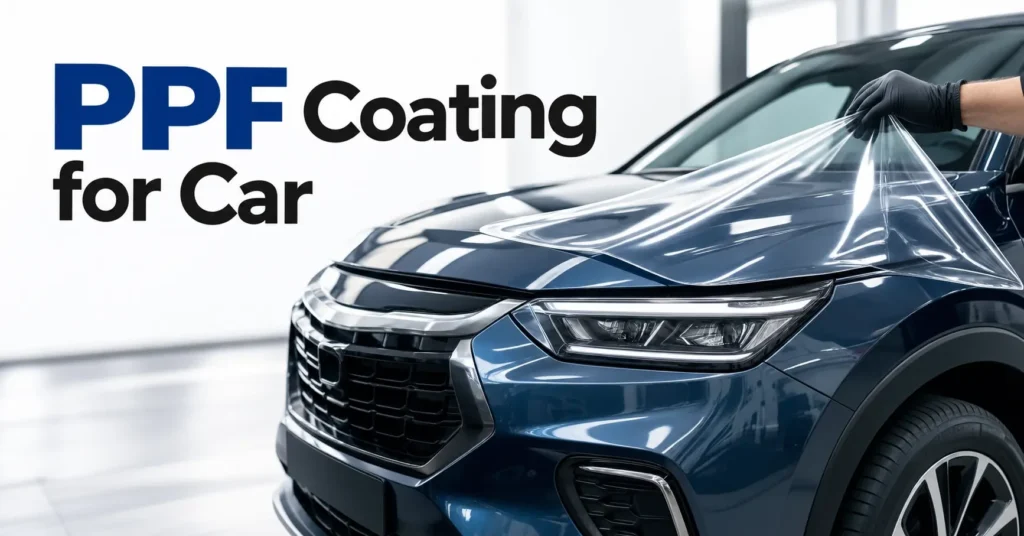
How do you protect your car’s paint from the small damages it faces every day?
Stone chips, minor scratches, road debris, bird droppings, tree sap, dust, and UV exposure can gradually affect the exterior finish, even when you wash and maintain your car regularly.
Car owners can choose from waxes, sealants, ceramic coatings, and Paint Protection Film, but each solution protects the paint differently.
PPF Coating for Car goes a step further by placing a transparent physical film over the painted surface. Along with helping protect against environmental contaminants, it can reduce the risk of damage from minor scratches, stone chips, and everyday road debris.
Understanding this difference can help you choose the right protection for your car.
What Is PPF Coating for Car?
Paint Protection Film, commonly known as PPF, is a transparent protective film that professionals apply over a vehicle’s painted surfaces.
Unlike liquid products that technicians spread or coat over the paint, PPF creates a physical barrier between the original paint and external elements. Depending on the installation, you can apply PPF to selected high-impact areas or cover most of the exterior painted surfaces.
Car owners commonly protect areas such as the bonnet, bumper, fenders, ORVMs, doors, and other panels that regularly face road debris and minor surface contact.
High-quality PPF can also include self-healing properties that help minor surface marks become less visible when exposed to heat.
PPF provides a durable physical barrier against everyday paint damage for owners who want to preserve their car’s original paint, especially from the early days of ownership.
How Does Regular Paint Protection Work?
The term “paint protection” can cover several products, including waxes, sealants, and ceramic coatings.
These treatments usually create a protective layer over the clear coat rather than placing a separate film over the body panel. Their primary role is to help protect the surface against environmental contamination while improving gloss and making routine cleaning easier.
For example, many paint protection treatments can help reduce the direct contact of water, dirt, bird droppings, tree sap, and other contaminants with the clear coat.
Some treatments also create hydrophobic properties, causing water to bead and roll off the surface more easily.
However, these solutions generally do not provide the same physical impact protection as PPF against stone chips or road debris.
How Does PPF Create a Physical Barrier Over the Paint?
The biggest difference between PPF Coating for Car and conventional paint protection comes from the way each solution protects the surface.
PPF uses a transparent film that sits over the vehicle’s paint. When small stones, road debris, or other minor external elements strike a protected panel, the film receives the initial contact instead of leaving the paint directly exposed.
This additional layer becomes particularly useful on high-impact areas such as the front bumper, bonnet, fenders, and ORVMs.
Conventional liquid-based paint protection creates a much thinner protective layer. It can help against environmental contamination, water spotting, oxidation, and surface staining, depending on the product, but it cannot provide the same level of physical cushioning as a protective film.
This physical barrier makes PPF particularly relevant for cars that regularly travel on highways, construction-heavy roads, or routes with loose gravel and debris.
Can PPF Coating for Car Protect Against Stone Chips?
Stone chips can affect a vehicle even when the owner drives carefully. Small stones and loose road debris can strike the front of a moving vehicle and leave visible marks on the bumper, bonnet, or fenders.
PPF helps reduce this risk by creating a protective layer over the original paint.
The film absorbs and disperses some of the impact from small stones and everyday road debris before they reach the painted surface underneath.
No protective film can make a vehicle completely resistant to damage. A sharp object, severe impact, accident, or sufficiently large piece of debris can still damage the PPF and potentially the underlying paint.
How Does PPF Coating for Car Help Against Minor Scratches?
Everyday vehicle use can cause small surface marks.
Tree branches, improper wiping, accidental contact, fingernails around door handles, and other minor interactions can leave marks on the exterior.
Many premium PPF products use a self-healing top layer. Heat can help this layer recover from certain light surface marks, allowing the film to maintain a smoother appearance.
Warm weather or controlled heat can activate this self-healing behaviour, depending on the specific film.
Self-healing does not mean the film can repair every type of damage. Deep cuts, punctures, severe scratches, and impacts may require professional inspection or film replacement.
Still, this property gives PPF an important advantage for owners concerned about minor everyday surface marks.
Does PPF Coating for Car Protect Against Environmental Damage?
PPF does more than protect against physical contact.
A quality film can also create a barrier against bird droppings, tree sap, bug splatter, road grime, and several other contaminants that would otherwise come into direct contact with the vehicle’s clear coat.
Some PPF products also provide resistance to UV exposure and staining.
This combination of physical and environmental protection makes PPF attractive to owners who want comprehensive exterior protection.
However, PPF still requires proper maintenance. Owners should regularly wash the vehicle, remove contaminants promptly, and follow the care instructions recommended for the installed film.
Is PPF More Suitable for Delhi NCR Driving Conditions?
Delhi NCR presents several challenges for vehicle paint.
Heavy traffic exposes cars to dust and road grime, while construction activity can increase exposure to loose debris. Highway and expressway travel can expose front panels to small stones and other particles travelling at speed.
Outdoor parking can add another set of challenges, including bird droppings, tree sap, dust, sunlight, and changing weather conditions.
PPF Coating for Car can help create a protective barrier between these everyday elements and the original paint.
Owners who frequently drive on highways or construction-heavy routes may particularly value PPF on high-impact areas such as the bumper, bonnet, fenders, and ORVMs.
Does PPF Affect the Original Appearance of the Car?
Professional installers apply transparent gloss PPF to preserve the appearance of the underlying paint while adding protection. A properly installed quality film should follow the contours of the body panels and maintain a clean finish.
Film quality and installation technique make a significant difference.
Poor-quality material may discolour, develop visible edges, or deteriorate prematurely. Improper installation can also create bubbles, lifting edges, stretch marks, contamination beneath the film, or uneven finishing.
Professional surface preparation and installation therefore play an important role in the final result.
Why Is Professional PPF Installation Important?
PPF installation requires more than simply placing film over the car.
Technicians should first inspect and thoroughly clean the painted surface. Any contamination trapped underneath the film can affect the final appearance.
The installer must then position and shape the film carefully according to each body panel. Proper alignment, stretching, edge finishing, and removal of installation solution all contribute to the final result.
A professional installation process typically focuses on:
- Careful paint and surface inspection
- Thorough exterior cleaning and decontamination
- Correct film positioning
- Proper coverage around curves and edges
- Controlled stretching where required
- Clean edge finishing
- Inspection for bubbles or trapped contaminants
- Final quality checks
Good installation helps the film look cleaner and perform effectively over its service life.
How Is PPF Different from Ceramic Coating?
PPF and ceramic coating often appear in the same conversation, but they serve different primary purposes.
PPF focuses strongly on physical paint protection. Its film construction can help shield the paint against minor scratches, stone chips, and road debris.
Ceramic coating primarily focuses on surface protection and maintenance. It creates a chemically bonded layer that can improve water repellency, gloss, and resistance to certain environmental contaminants.
What Factors Affect PPF Coating Price?
The PPF Coating Price can vary considerably because every installation does not use the same film, coverage, vehicle size, or preparation process.
Several factors influence the final cost.
Film quality: Premium films generally use better materials, top coats, adhesive systems, optical clarity, and self-healing technology.
Vehicle size: A larger SUV usually requires more material than a compact hatchback.
Coverage area: Full-body PPF requires considerably more film and installation time than protecting selected panels.
Body complexity: Vehicles with complex curves, sharp edges, spoilers, and intricate exterior designs can require more installation time.
Surface preparation: A car with existing contamination or paint imperfections may require additional preparation before installation.
Installation quality: Experienced technicians, controlled installation conditions, careful edge finishing, and detailed workmanship also influence the overall service cost.
Should You Install PPF on a New Car?
Installing PPF early can help owners preserve the original paint before everyday road exposure begins to leave marks.
A new vehicle generally starts with paint that has experienced less road contamination, stone-chip exposure, and surface damage. Protecting it early allows the film to cover the finish while it remains in relatively fresh condition.
This can particularly benefit owners who plan to keep their vehicle for several years, regularly drive on highways, park outdoors, or simply want to maintain the original finish.
However, technicians should still inspect the paint before installation. Even a recently delivered vehicle can have surface contamination or minor imperfections that require attention.
Can PPF Help Preserve the Original Paint for Longer?
PPF can help reduce direct exposure of the factory paint to several everyday hazards.
By placing a replaceable protective film over the painted surface, owners can reduce the chances of minor road debris and surface contact directly affecting the clear coat underneath.
Preserving original paint can also help maintain the vehicle’s overall exterior condition over time.
However, PPF should form part of proper vehicle care rather than replace it. Regular washing, correct cleaning techniques, prompt contaminant removal, and periodic inspection of the film remain important.
Conventional paint protection products primarily create a surface layer that can improve gloss, water repellency, resistance to contaminants, and ease of cleaning. They work well for owners whose main priorities involve maintaining shine and reducing environmental contamination.
PPF Coating for Car adds a transparent physical film over the original paint. This allows it to provide an additional level of protection against stone chips, minor scratches, road debris, and everyday surface contact while also helping shield the paint from contaminants.
If physical paint protection remains your main priority, PPF offers an important advantage because it places an actual protective film between the road environment and your car’s original finish.
Visit Auto Car Repair for expert PPF coating installation in Delhi NCR.
FAQs
1. What is PPF Coating for Car?
PPF Coating for Car uses a transparent protective film over the vehicle’s painted surfaces. The film creates a physical barrier that helps protect the original paint against minor scratches, stone chips, road debris, stains, and everyday environmental exposure while maintaining the appearance of the underlying paint.
2. Is PPF better than regular paint protection?
PPF and conventional paint protection serve different purposes. PPF provides a physical barrier that can help protect against minor impacts, scratches, and stone chips. Waxes, sealants, and ceramic coatings primarily help with surface contamination, gloss, water repellency, and easier maintenance.
3. What factors determine PPF Coating Price?
The PPF Coating Price depends on the vehicle size, film quality, coverage area, body-panel complexity, surface preparation, installation quality, warranty, and other service requirements. Full-car PPF generally requires more material and installation work than protecting selected high-impact panels.
4. Can PPF remove existing scratches from car paint?
No. PPF protects the surface after installation but does not repair scratches already present in the paint. Technicians should inspect the vehicle before installation and may recommend suitable paint correction for certain surface imperfections before applying the film.
5. Where can I get PPF Coating for Car in Delhi?
Visit ACR for professional PPF Coating for Car. The team can assess your vehicle and help you understand suitable film and coverage options based on your paint condition, driving requirements, protection expectations, and budget.
Protect Your Car’s Paint with Auto Car Repair
Give your vehicle an added layer of protection with professional PPF Coating for Car at ACR. Our team carefully prepares the surface and installs quality paint protection film to help protect your car against minor scratches, stone chips, road debris, and everyday environmental exposure.
Book your car service at Auto Car Repair today!
| Showroom Location | Address | Call/Whatsapp Number | Nearby Locations |
| Moti Nagar | 57, Rama Rd, Block C, Najafgarh Road Industrial Area, New Delhi, Delhi, 110015 | 098704 00861 | Ramesh Nagar, Punjabi Bagh, Rajouri Garden, Mayapuri, Kirti Nagar, Janakpuri, Sudarshan Park, Chand Nagar, ESI, |
| Gurugram | Unit-1 Plot No 29 & 30, near, Kargil Shaheed Sukhbir Singh Yadav Marg, Info Technology Park, Sector 34, Gurugram, Haryana 122004 | 098104 46692 | Sec 37 Gurugram, Sec 37B Gurugram, Sec 72A Gurugram, Sec 74 Gurugram, Sec 35 Gurugram, Sec 36 Gurugram, |
| Noida | H-142, near Ananda Corporate Office, H Block, Sector 63, Noida, Uttar Pradesh 201309 | 097739 94175 | Noida 63, Noida 62, Noida 65, Noida 66, Gaur City 2, Indirapuram, |
| Okhla | ACR Automobiles Plot No. 1 – 8, DSIDC Sheds, Okhla Phase 2, New Delhi, 110020 | 092892 00643 | Okhla Phase 2, Sarita Vihar, Jasola Vihar, Govindpuri, Okhla Nsic, Nehru Palace, |