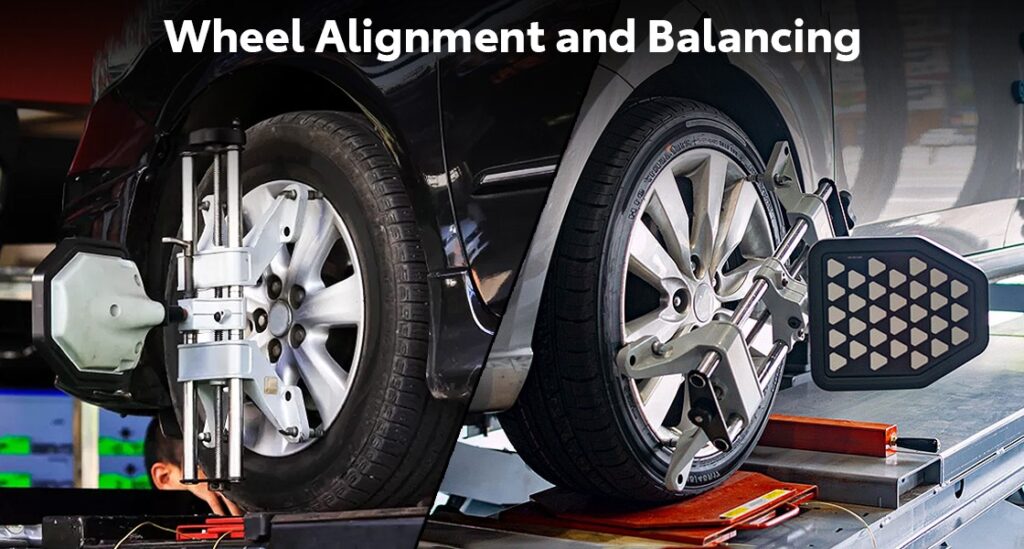
Wheel alignment and balancing play a crucial role in maintaining your car’s safety, handling, tyre life, and overall driving comfort.
When the wheels are not properly aligned or balanced, they can slowly affect various vehicle systems, hampering your driving performance. Recognising the early signs of wheel alignment and balancing issues can help you avoid expensive repairs, improve fuel efficiency, and enjoy a smoother ride.
Find below the most common indicators that your car needs wheel alignment and balancing near me.
Table of Contents
Toggle1. Car Pulls to One Side While Driving
When your car pulls to one side, it is a clear indication of wheel alignment issues.
- Vehicle drifts left or right even on a straight road
- Requires constant steering correction
- Becomes tiring during long drives
- Indicates misaligned wheels affecting straight-line stability
- Can worsen tyre wear if ignored
Proper wheel alignment restores straight tracking and improves driving comfort.
2. Uneven or Rapid Tyre Wear
Tyre wear accelerates in case the wheels are misaligned or not balanced.
- Excessive wear on inner or outer tyre edges
- One tyre is wearing faster than the others
- Cupping or scalloped tyre surfaces
- Reduced tyre lifespan
- Frequent tyre replacements increase costs
Wheel alignment and balancing ensure tyres wear evenly and last longer.
3. Steering Wheel Feels Off-Centre
A misaligned steering wheel is a common warning sign.
- Steering wheel not straight when driving straight
- Vehicle travels straight but steering feels tilted
- Indicates incorrect wheel angles
- Reduces driving confidence
- Affects steering precision
Correct alignment ensures the steering wheel remains centred and responsive.
4. Steering Wheel Vibrations at Certain Speeds
Wheel balancing issues often cause vibrations while driving.
- Steering wheel shakes at high or specific speeds
- Vibration felt mainly on smooth roads
- Worsens as speed increases
- Caused by uneven weight distribution in wheels
- Affects driving comfort and control
Wheel balancing contributes to smooth driving.
5. Bumpy or Unstable Ride
An unstable ride can be linked to alignment or balancing problems.
- The car feels shaky or unsettled
- Excessive bouncing after bumps
- Reduced road grip
- Poor contact between tyres and road
- Affects ride comfort
Proper wheel alignment and balancing improve stability and ride quality.
6. Noisy Tyres While Driving
Unusual tyre noise is often overlooked.
- Humming or droning sounds while driving
- Noise increases with speed
- Caused by uneven tyre contact with road
- Indicates alignment or balancing issues
- Leads to faster tyre deterioration
Timely wheel service reduces tyre noise and improves cabin comfort.
7. Reduced Fuel Efficiency
Wheel alignment directly impacts mileage.
- Misaligned wheels create rolling resistance
- Engine works harder to move the car
- Increased fuel consumption
- Higher daily running costs
- Loss of efficiency over time
Correct wheel alignment helps restore optimal fuel efficiency.
8. Vehicle Feels Difficult to Handle
Handling issues can indicate wheel-related problems.
- Reduced steering responsiveness
- Difficulty maintaining control on curves
- Unstable feel during lane changes
- Increased driver effort
- Compromised safety
Wheel alignment and balancing improve vehicle control and handling.
9. Frequent Steering Corrections Required
Constant steering corrections signal wheel alignment issues.
- The steering wheel needs continuous adjustment
- The vehicle doesn’t track straight
- Increased driver fatigue
- Difficult to maintain a consistent speed and direction
- Affects long-distance comfort
Proper alignment reduces steering effort and enhances comfort.
10. Tyres Lose Grip on Wet Roads
Alignment issues can affect traction.
- Reduced tyre contact patch
- Increased risk of skidding
- Poor wet-road performance
- Longer braking distances
- Increased accident risk
Correct alignment improves grip and braking efficiency.
11. Recent Tyre Replacement or Suspension Repair
In certain scenarios, alignment and balancing is required by default.
- New tyres installed
- Suspension or steering repairs completed
- After hitting potholes or kerbs
- Following accidents or hard impacts
- To ensure tyres perform correctly
Skipping wheel alignment and balancing after such events leads to premature wear.
12. Steering Feels Loose or Tight
Changes in steering feel are warning signs of alignment and balancing issues.
- Steering feels heavier than usual
- Delayed response during turns
- Inconsistent steering behaviour
- Caused by incorrect wheel angles
- Affects driving confidence
Wheel alignment restores proper steering feel.
13. Visible Vehicle Lean or Uneven Stance
Wheel alignment problems can affect vehicle posture.
- One side appears lower than the other
- Uneven tyre gaps in wheel arches
- Indicates alignment or suspension issues
- Impacts handling and tyre wear
- Requires immediate inspection
Proper wheel service helps correct these issues early.
14. Increased Wear on Suspension and Steering Parts
Misaligned wheels strain other components.
- Accelerated wear of ball joints and tie rods
- Extra stress on suspension components
- Increased repair costs over time
- Reduced vehicle lifespan
- Avoidable with timely service
Wheel alignment protects your suspension and steering system.
Why Timely Wheel Alignment and Balancing Matter?
Ignoring these signs can lead to:
- Frequent tyre replacements
- Poor fuel efficiency
- Steering and suspension damage
- Reduced safety
- Higher overall maintenance costs
Timely wheel alignment and balancing improve comfort, safety, and long-term savings.
Check out the car wheel alignment and balancing cost at Auto Car Repair in Delhi.
FAQs – Wheel Alignment and Balancing
1. How often should wheel alignment and balancing be done?
Wheel alignment and balancing should be checked every 10,000 km or whenever you notice uneven tyre wear, steering issues, or vibrations.
2. Is wheel alignment different from wheel balancing?
Yes. Alignment adjusts wheel angles, while balancing corrects uneven weight distribution in tyres and wheels.
3. Can poor wheel alignment damage tyres?
Absolutely. Misalignment causes uneven and rapid tyre wear, reducing tyre lifespan significantly.
4. Is wheel alignment required after changing tyres?
Yes. New tyres should always be aligned and balanced to ensure even wear and optimal performance.
5. Can wheel alignment improve fuel efficiency?
Yes. Proper alignment reduces rolling resistance, helping the car move more efficiently and improve mileage.
Book Your Car Service at Auto Car Repair!
The multi-brand car service center caters to a wide range of automotive repair and maintenance services. The expert technicians diagnose and repair various issues with the latest diagnostic tools and OEM parts.
Visit Auto Car Repair today for the best car care in Delhi NCR!
Visit Auto Car Repair Locations
Moti Nagar: 60 N G Road, Rama Rd, Moti Nagar, New Delhi, Delhi 110015
Okhla: G7JF+F87, Pocket W, Okhla Phase II, Okhla Industrial Estate, New Delhi, Delhi 110020
Noida: H-142, near Ananda Corporate Office, H Block, Sector 63, Noida, Uttar Pradesh 201301