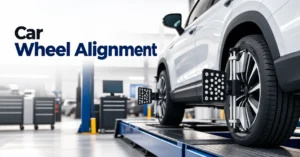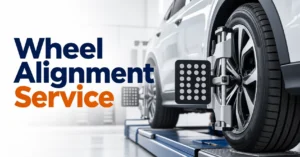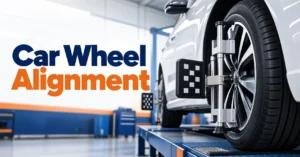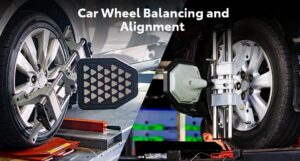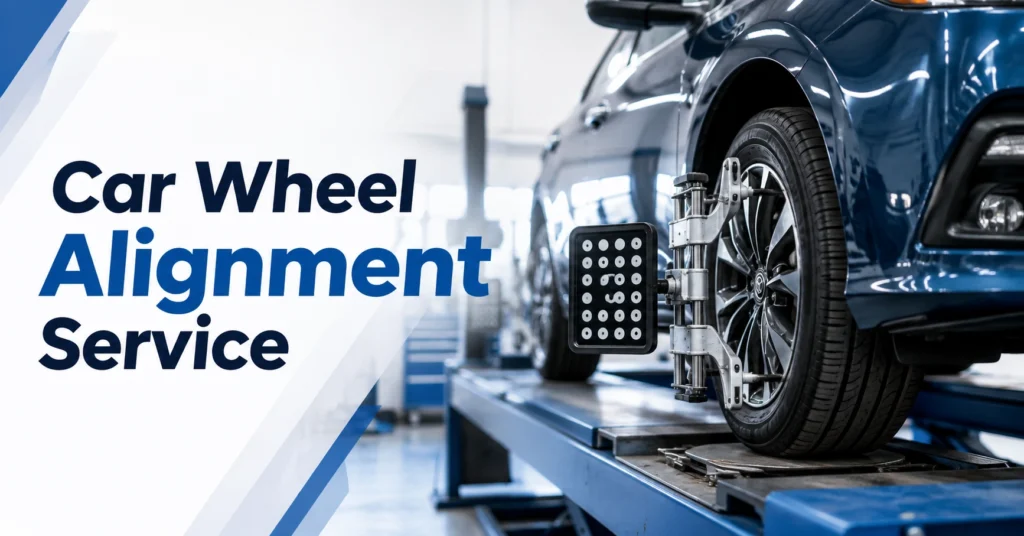
Does your car feel different after hitting a pothole? Is the steering wheel no longer straight when you’re driving straight? Or have you noticed uneven tyre wear?
These could be signs that your car’s wheel alignment needs attention. Delhi’s busy roads expose vehicles to potholes, speed breakers, uneven surfaces and frequent manoeuvring, which can affect wheel angles over time. Car wheel alignment helps keep the wheels at the manufacturer’s recommended angles, supporting predictable steering, proper tyre contact and consistent handling.
What Is Car Wheel Alignment?
Car wheel alignment refers to adjusting the angles of the wheels so they match the manufacturer’s recommended specifications. These angles determine how the tyres sit against the road and how the vehicle behaves when you steer, accelerate, or brake.
The primary alignment measurements include camber, caster, and toe.
- Camber describes the inward or outward tilt of the wheel when viewed from the front.
- Caster refers to the steering-axis angle when viewed from the side.
- Toe indicates whether the front edges of the tyres point slightly inward or outward when viewed from above.
These measurements work together to help the vehicle maintain proper directional stability and predictable handling. Even a relatively small change can affect tyre contact, steering behaviour, and wear.
A wheel alignment service generally involves checking the current wheel angles against the manufacturer’s recommended specifications and making appropriate adjustments where possible.
Why Does Wheel Alignment Matter for Safer Driving in Delhi?
Delhi’s road conditions can place considerable stress on a vehicle’s wheels, tyres, steering components, and suspension. Maintaining correct alignment helps the vehicle respond more predictably to steering inputs and maintain appropriate tyre contact with the road.
Find below the key reasons alignment deserves attention.
1. It Helps Maintain Directional Stability
A properly aligned vehicle should travel in a relatively straight line when the driver holds the steering wheel normally on a smooth road.
Incorrect alignment can cause the vehicle to drift or pull towards one side. This becomes particularly inconvenient in Delhi’s busy traffic, where drivers frequently need to maintain their position within narrow lanes.
A vehicle that consistently pulls left or right can require continuous steering corrections. This can make longer commutes more tiring and may reduce the driver’s ability to make smooth steering inputs when traffic conditions change suddenly.
Correct alignment helps the vehicle maintain more predictable directional behaviour.
2. It Supports Better Steering Control
Delhi traffic often requires frequent steering adjustments. Drivers may need to navigate around parked vehicles, motorcycles, potholes, road debris, buses, and changing lanes within short distances.
Correct wheel alignment supports consistent steering response. When the wheels remain at their intended angles, the driver can generally make smoother and more predictable steering corrections.
Poor alignment, on the other hand, can make the steering feel unusual. The vehicle may not respond as expected when the driver turns the wheel, or the steering wheel may remain slightly off-centre while the car travels straight.
3. It Helps Maintain Proper Tyre Contact
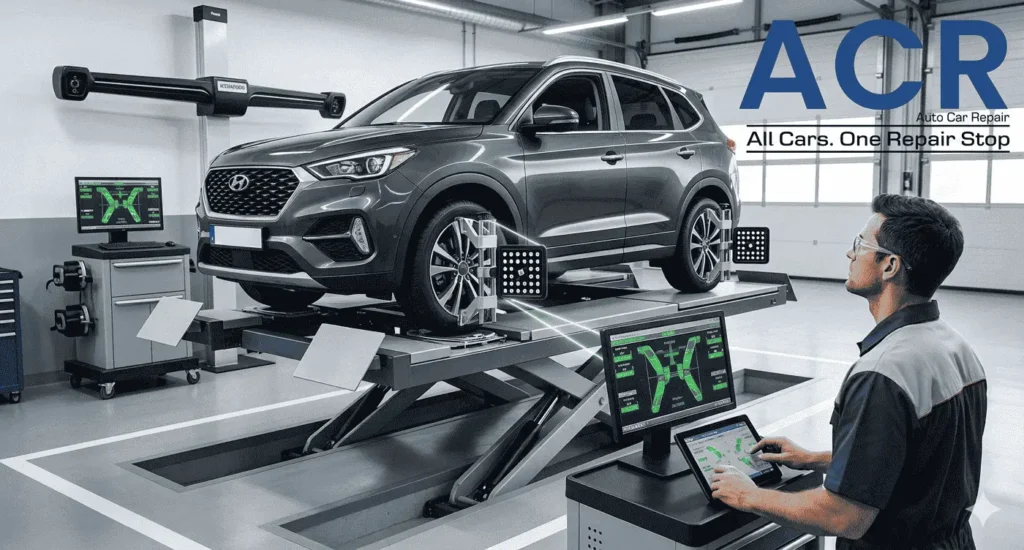
Tyres provide the vehicle’s primary contact with the road. Their ability to grip effectively depends on several factors, including tyre condition, inflation pressure, road conditions, and wheel alignment.
Incorrect alignment can alter how the tyre meets the road surface. Instead of maintaining the intended contact pattern, part of the tyre may experience greater pressure or friction.
This can contribute to uneven tread wear and potentially reduce the tyre’s useful life.
Maintaining correct alignment helps the tyres work closer to the way the vehicle manufacturer intended, supporting consistent road contact during everyday driving.
4. It Reduces Uneven Tyre Wear
Uneven tyre wear is one of the most visible consequences of incorrect wheel alignment.
A driver may notice that the inner or outer edge of a tyre is wearing faster than the rest of the tread. In some cases, the difference may not be obvious until the vehicle undergoes a tyre inspection.
Delhi’s potholes and uneven surfaces can increase the likelihood of alignment changes. If a car continues to operate with incorrect alignment, the resulting tyre wear can accelerate.
Regular alignment checks allow potential issues to be identified before excessive tyre wear develops.
5. It Helps Drivers Handle Pothole-Related Effects
Potholes are an unavoidable part of driving on many busy city roads. A significant impact can affect more than just the tyre.
Hitting a pothole can potentially disturb wheel alignment or affect steering and suspension components. A driver may notice a change immediately, while smaller changes can develop gradually.
If the vehicle begins pulling to one side or the steering wheel no longer sits straight after a significant pothole impact, an alignment inspection can help determine whether the wheel angles have changed.
Delhi drivers should therefore consider checking alignment after a particularly severe pothole impact rather than waiting for obvious tyre problems to appear.
6. It Supports More Predictable Cornering
Correct alignment contributes to predictable handling when the vehicle changes direction.
This matters during everyday Delhi driving, particularly when navigating intersections, curves, flyovers, parking areas, and congested roads.
When wheel angles remain within the manufacturer’s recommended range, the tyres can maintain their intended relationship with the road while the driver steers.
Incorrect alignment can make the vehicle feel less settled or require additional steering corrections. While alignment is only one factor affecting handling, maintaining it correctly supports a more predictable driving experience.
How Delhi Road Conditions Can Affect Wheel Alignment
Delhi’s road environment can expose vehicles to situations that potentially affect alignment.
Potholes
A hard pothole impact can transmit significant force through the tyre and wheel into the suspension system. Depending on the severity of the impact, this may alter wheel alignment or damage related components.
Speed Breakers
Poorly marked or uneven speed breakers can create sudden impacts when drivers approach them at inappropriate speeds. Repeated impacts can contribute to wear in suspension and steering components.
Kerb Impacts
Touching or striking a kerb while parking or maneuvering can also affect alignment. Even when the tyre appears undamaged, the impact may warrant an inspection if the vehicle’s steering behaviour changes afterward.
Uneven Road Surfaces
Delhi drivers regularly encounter roads with patches, uneven surfaces, construction zones, and deteriorated sections. Repeated exposure can place additional stress on wheels, tyres, and suspension components.
Heavy Traffic
Stop-and-go traffic does not directly cause wheel misalignment, but frequent manoeuvring, tight parking, kerb contact, and sudden road impacts can increase the situations in which alignment may be affected.
7 Signs Your Car May Need Wheel Alignment
Knowing the warning signs can help Delhi car owners identify alignment problems earlier.
1. The Car Pulls to One Side
If the vehicle consistently moves towards the left or right when you are trying to drive straight, incorrect alignment could be one possible cause.
However, tyre pressure differences, road camber, and suspension issues can also cause pulling. A professional inspection can identify the actual cause.
2. Steering Wheel Is Off-Centre
If the car travels straight but the steering wheel sits noticeably to one side, the alignment may require inspection.
3. Uneven Tyre Wear
Inspect the tyre tread regularly. Excessive wear on the inner or outer edges can indicate an alignment-related problem.
4. Steering Feels Unusual
Changes in steering response, particularly after hitting a pothole or curb, should not be ignored.
5. Vehicle Feels Less Stable
If the vehicle feels less predictable while changing direction or maintaining a straight path, checking the alignment and related steering and suspension components can help identify the problem.
6. Steering Wheel Vibrations
Vibrations can have several causes, including wheel imbalance, tyre problems, and suspension issues. While vibration does not automatically indicate an alignment problem, it can justify a professional inspection.
7. The Problem Appears After a Major Impact
If your car hits a deep pothole, kerb, or another significant obstacle and its steering behaviour changes afterward, checking wheel alignment is a sensible step.
How Often Should You Check Wheel Alignment in Delhi?
As a practical baseline, Delhi car owners can consider checking wheel alignment approximately every 5,000–8,000 km or around every six months, particularly when the vehicle regularly encounters poor road surfaces.
Drivers who cover long distances every day or frequently travel on rough roads may benefit from more frequent inspections.
You should also consider an alignment check after:
- A major pothole impact
- A kerb strike
- An accident
- Suspension or steering repairs
- Tyre replacement
- Noticeable uneven tyre wear
- The vehicle beginning to pull to one side
- A steering wheel becoming off-centre
- Significant changes in steering behaviour
An inspection does not necessarily mean the vehicle needs adjustment. A technician can first determine whether the wheel angles remain within the recommended specifications.
Wheel Alignment vs Wheel Balancing: What’s the Difference?
Drivers often confuse wheel alignment with wheel balancing, but they address different problems.
Wheel alignment focuses on the angles at which the wheels sit relative to the vehicle and road.
Wheel balancing focuses on distributing the weight of the wheel and tyre assembly evenly around the axle.
A vehicle with an alignment problem may pull to one side or show uneven tyre wear. A wheel-balancing problem can commonly produce vibrations, particularly at certain speeds.
In some situations, a vehicle may require both services. A proper inspection can determine which issue is responsible for the symptoms.
Delhi’s potholes, speed breakers and uneven roads can gradually affect your car’s wheel alignment, leading to steering changes, uneven tyre wear and less predictable handling. Regular alignment checks, especially after major road impacts, can help identify these issues early.
Wheel alignment should be part of routine vehicle maintenance rather than something to consider only when problems appear. Keeping the wheels correctly aligned helps support smoother steering, consistent tyre contact and a more confident driving experience.
Get the best wheel alignment charges at Auto Car Repair in Delhi NCR.
FAQs About Car Wheel Alignment in Delhi
1. How often should I get wheel alignment checked in Delhi?
Delhi car owners can consider checking wheel alignment every 5,000–8,000 km or approximately every six months as a practical baseline. Vehicles that regularly encounter potholes, rough roads, or heavy daily commuting may require more frequent checks. An alignment inspection is also advisable after major pothole impacts, kerb strikes, accidents, or suspension repairs.
2. What are the most common signs of incorrect wheel alignment?
Common signs include the car pulling to one side, an off-centre steering wheel, uneven tyre wear, unusual steering behaviour, and changes in handling. Steering vibrations can also indicate a wheel or tyre problem, although vibration does not necessarily mean poor alignment. A professional inspection can identify the actual cause.
3. Can potholes affect my car’s wheel alignment?
Yes. A severe pothole impact can potentially change wheel alignment or affect steering and suspension components. If your car starts pulling to one side, the steering wheel becomes off-centre, or the handling changes after hitting a pothole, have the vehicle inspected to determine whether alignment or another component requires attention.
4. Does wheel alignment improve tyre life?
Correct wheel alignment can help reduce uneven tyre wear by keeping the wheels at their intended angles. Incorrect alignment may cause excessive wear on the inner or outer edges of the tyres. However, tyre life also depends on inflation pressure, rotation, road conditions, driving habits, suspension condition, and the tyres themselves.
5. Is wheel alignment the same as wheel balancing?
No. Wheel alignment adjusts the angles of the wheels according to the manufacturer’s specifications, while wheel balancing ensures that the tyre and wheel assembly rotates with its weight distributed evenly. Alignment problems can cause pulling and uneven tyre wear, while balancing problems commonly cause vibrations at certain speeds.
Auto Car Repair in Delhi NCR
Auto Car Repair helps car owners across Delhi NCR maintain dependable vehicle performance through professional maintenance and repair solutions. With trained technicians, modern diagnostic equipment and a focus on quality workmanship, the workshop efficiently addresses all automotive needs.
Book your car service at Auto Car Repair today!
| Showroom Location | Address | Call/Whatsapp Number | Nearby Locations |
| Moti Nagar | 57, Rama Rd, Block C, Najafgarh Road Industrial Area, New Delhi, Delhi, 110015 | 098704 00861 | Ramesh Nagar, Punjabi Bagh, Rajouri Garden, Mayapuri, Kirti Nagar, Janakpuri, Sudarshan Park, Chand Nagar, ESI, |
| Gurugram | Unit-1 Plot No 29 & 30, near, Kargil Shaheed Sukhbir Singh Yadav Marg, Info Technology Park, Sector 34, Gurugram, Haryana 122004 | 098104 46692 | Sec 37 Gurugram, Sec 37B Gurugram, Sec 72A Gurugram, Sec 74 Gurugram, Sec 35 Gurugram, Sec 36 Gurugram, |
| Noida | H-142, near Ananda Corporate Office, H Block, Sector 63, Noida, Uttar Pradesh 201309 | 097739 94175 | Noida 63, Noida 62, Noida 65, Noida 66, Gaur City 2, Indirapuram, |
| Okhla | ACR Automobiles Plot No. 1 – 8, DSIDC Sheds, Okhla Phase 2, New Delhi, 110020 | 092892 00643 | Okhla Phase 2, Sarita Vihar, Jasola Vihar, Govindpuri, Okhla Nsic, Nehru Palace, |